 blog
Commercial Waste Collection in the Medway Area Explained
Last Updated: October 30, 2026
Quick Summary
Commercial waste collection is the licensed removal of business-generated rubbish from your premises on a scheduled or on-demand basis. Junkmove Ltd provides commercial waste collection for businesses across the Medway area, covering general trade waste, mixed recycling, food waste and bulky one-off clearances. Every business in England has a legal duty of care to use a registered waste carrier.
- Ask for the carrier's registration number and confirm it with the Environment Agency before you book.
- A typical arrangement separates dry mixed recycling, food waste, general waste and glass into distinct streams.
- Pricing depends on container size, collection frequency, waste type, site access and contract length.
- A written quote should state whether disposal, bin rental and delivery charges are included.
- Tell your provider upfront about tight street access or restricted parking so the right vehicle is arranged.
Table of Contents
- What Commercial Waste Collection in the Medway Area Actually Involves
- Business Waste Collection: Matching the Service to Your Premises
- Why a Licensed Waste Carrier Matters for Your Duty of Care
- Business Recycling Services and What Happens to Your Waste
- Commercial Skip Hire, RoRo Containers and When Each Fits
- What Drives Commercial Waste Collection Costs and Contract Terms
- Collection Schedules, Access and the Details That Cause Problems
- Book a Licensed Waste Collection for Your Business
- Frequently Asked Questions
What Commercial Waste Collection in the Medway Area Actually Involves
Commercial waste collection is the licensed removal of business-generated rubbish from your premises on a scheduled or on-demand basis. Junkmove Ltd provides commercial waste collection for businesses across the Medway area, and a common mistake is treating it as an afterthought until a bin overflows.
That approach costs money. Under the Environment Agency's waste duty of care guidance, every business in England has a legal duty to store, transport and dispose of its waste responsibly, and to use a registered waste carrier. Get it wrong and the fine lands on you, not the contractor.
Below, we'll break down what each service type actually covers, what drives the cost, and how to avoid the access and scheduling problems that cause most callouts.
Business Waste Collection: Matching the Service to Your Premises
The right business waste collection service depends on what you produce and how much space you have. A salon generates different waste to a builder's yard, and a café on a tight high street has different access needs to an office with a rear loading bay.
We group commercial waste into a few practical categories:
- General trade waste for everyday office and retail rubbish
- Mixed recycling for cardboard, paper, plastics and cans
- Food waste for kitchens and cafés
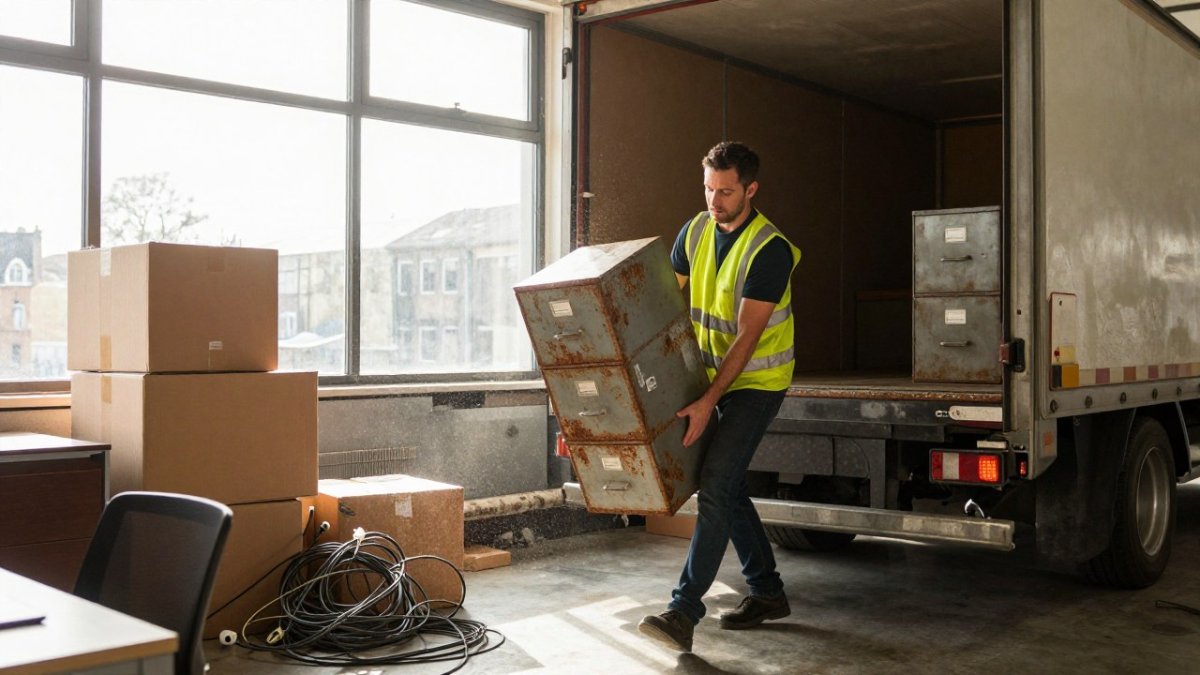
- Bulky and one-off clearances for fit-outs and moves
A common mistake is ordering a larger container than you need because it feels safer. In practice, an oversized bin that sits half-empty for weeks costs more and creates more collection-day hassle than a right-sized one.
Office Waste, Trade Waste and Construction Debris
Office waste is mostly paper, packaging and canteen refuse, and it's usually the easiest to schedule. Trade waste from shops and hospitality tends to be heavier and wetter, so it needs a container that won't leak or split.
Construction and renovation debris is a different job entirely. Builders' waste is dense, often bulky, and sometimes contains materials that need separating before disposal. If you're a contractor running multiple sites, you need a provider who can handle repeat pickups rather than a one-off run.
Why a Licensed Waste Carrier Matters for Your Duty of Care
A licensed waste carrier is a business registered with the Environment Agency to transport and dispose of waste legally.
The government guidance on checking a waste carrier's registration sets out exactly what to check. Ask for the carrier's registration number and confirm it before you book. A legitimate operator will hand it over without hesitation.
Watch out for a cheap quote with vague paperwork. Check how disposal is handled before you book, because your duty of care doesn't transfer with the waste.
Business Recycling Services and What Happens to Your Waste
Business recycling services sort your waste into streams that can be reprocessed rather than landfilled. Paper, cardboard, glass, metals and plastics all have established recycling routes, and separating them properly reduces what you send to disposal. But the difference between a provider that genuinely recycles and one that simply says it does comes down to segregation at source, destination transparency, and the evidence they can put in your hands.
Segregation at source: what actually gets separated
Most commercial collections work on a two- to four-stream model. A typical arrangement separates:
- Dry mixed recycling, cardboard, paper, plastic bottles and tubs, cans and tins
- Food waste, kitchen and canteen arisings, usually in sealed caddies or bins
- General waste, anything not recyclable, destined for energy recovery or landfill
- Glass, often a separate stream for pubs, restaurants and cafés
Contamination is the enemy of recycling performance. A single bin bag of general waste tipped into a dry mixed recycling container can render the whole load unfit for reprocessing.
Where your waste actually goes
Recyclables are typically sorted at a transfer station and sent to reprocessing facilities, with non-recyclable waste routed to energy recovery where possible.
Ask your provider where your waste actually goes. If they can't name the transfer station and the reprocessing route, that's a red flag. A provider should be able to describe the chain from your bin to the end processor.
What evidence you can ask for
Recycling performance is one of the areas most providers gloss over. Instead of accepting a generic green claim, ask for:
- Waste transfer notes for each collection, which record the type and quantity of waste transferred
- A diversion-from-landfill figure for your account, not a company-wide average
- Destination details for each waste stream, which transfer station, which reprocessor
- Annual waste summary if you need to report on environmental performance to a landlord, client or accreditation scheme
A simple question at the quote stage, "what percentage of our waste gets recycled, and how will you show me?", separates the operators who care from the ones who don't.
Commercial Skip Hire, RoRo Containers and When Each Fits
| Option | Best for | Typical constraint |
|---|---|---|
| Wheelie bins | Regular office and retail waste | Limited capacity |
| Caged truck | Bulky cardboard and light waste | Needs vehicle access |
| Skip hire | Short renovation and strip-out jobs | Permit needed on public land |
| RoRo container | Construction and high-volume sites | Needs space and access |
What Drives Commercial Waste Collection Costs and Contract Terms
Pricing for commercial waste collection depends on quantity, frequency, waste type and site access. Pricing depends on quantity, dates and delivery, so please contact Junkmove Ltd for current prices or a quote.
What actually moves the price
- Container size and number, a 240-litre wheelie bin and a 1,100-litre bin are different jobs, and a multi-bin site multiplies the collection cost
- Collection frequency, weekly, fortnightly or on-demand; more frequent empties mean more vehicle movements and higher cost
- Waste type, general waste is the baseline; food waste, glass and hazardous or specialist streams carry different handling and disposal costs
- Access and location, tight high street access, restricted parking, or a bin store a long drag from the vehicle all add time and cost
- Contract length, longer terms usually attract a lower per-collection rate but lock you in
What a quote should include, and what it often hides
A written quote should state whether the price includes disposal, the bin hire or rental element, and any delivery or collection charges. The most common surprise on a first invoice is a separate disposal or weight charge that wasn't in the headline rate. Ask specifically:
- Is the quoted price per collection or per lift, and does it include disposal?
- Is there a bin rental charge on top of the collection charge?
- Are there delivery, removal or relocation fees?
- What is the charge for an extra or missed collection?
- Are contaminated recycling loads charged at general waste rates?
A quote that lists every charge is worth more than a headline figure that doesn't.
One-off collections versus regular contracts
The trade-off is commitment. A 12-month contract with a low rate can cost more than a flexible arrangement if your waste volume drops or your premises change. Match the term to how predictable your output really is.
Contract terms to check before signing
Before signing any waste contract, check:
- The minimum contract length and notice period, and how notice must be given
- Whether collection frequency can change mid-term, and at what cost
- What happens if you miss a collection or overfill a bin
- Any charges for extra pickups or contaminated recycling
- Whether the price is fixed for the term or subject to review
Collection Schedules, Access and the Details That Cause Problems
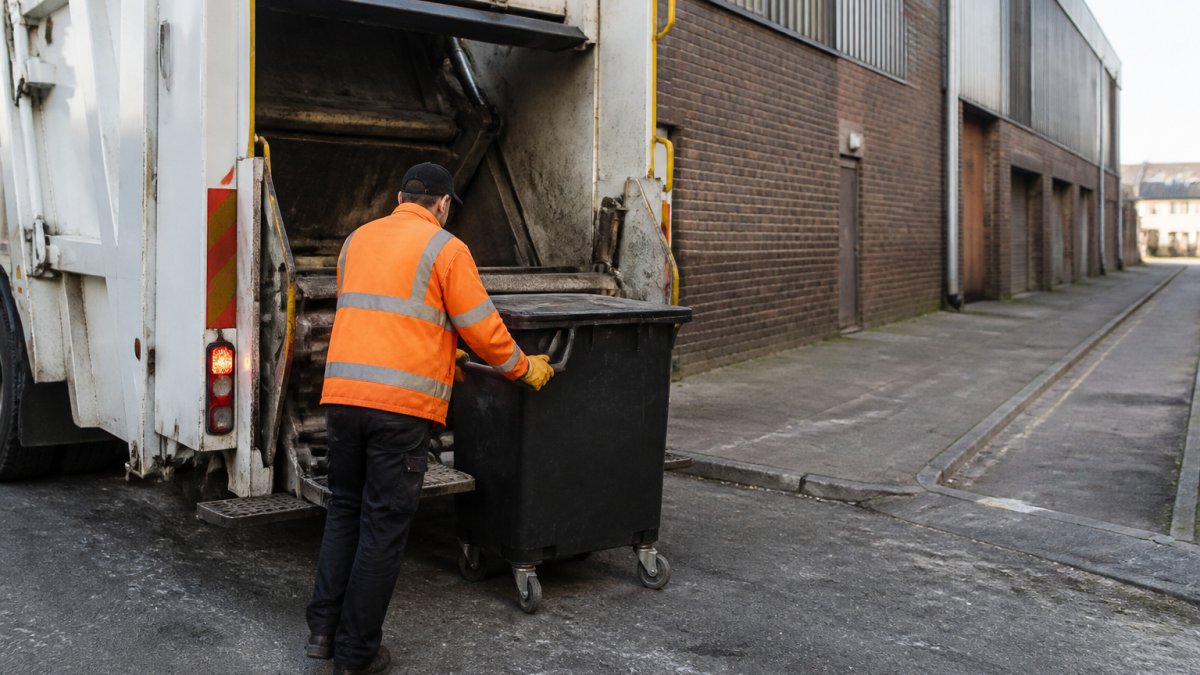
Collection schedules and site access cause more missed pickups than anything else. A bin that can't be reached, a gate that's locked, or a loading bay blocked by a delivery all mean the truck leaves without emptying it.
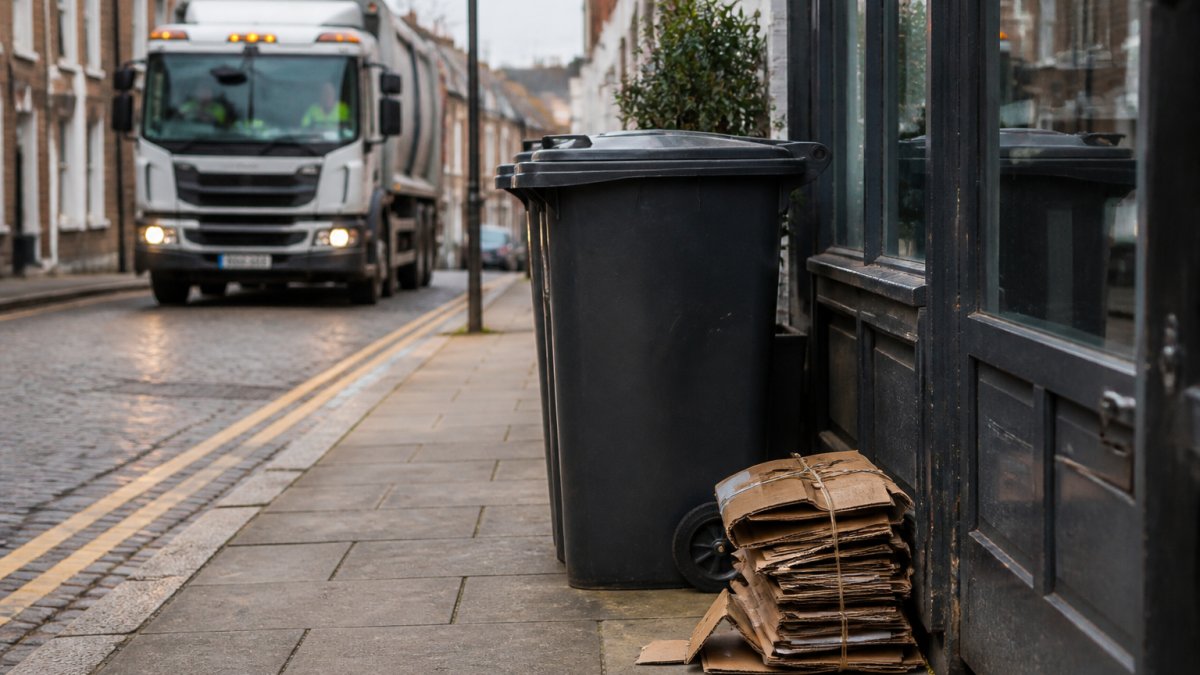
If your only access is a tight street with restricted parking, tell your provider upfront so the right vehicle and timing can be arranged.
The other issue is timing. If your waste builds up over a weekend and your collection is Monday morning, you need enough capacity to hold it. Match your schedule to your actual production, not to what looks tidy on paper.
Book a Licensed Waste Collection for Your Business
Getting waste collection right comes down to three things: a licensed carrier, a service sized to your actual output, and a schedule that matches how your premises really operate. Most businesses get one of those wrong and pay for it in missed pickups or unexpected charges.
Junkmove Ltd provides licensed waste removal with tailored clearance plans, same-day service, and environmentally responsible disposal through recycling, composting and waste-to-energy solutions. We'll tell you what your site needs rather than overselling a bigger container.
Get started with Junkmove Ltd and book a licensed waste collection that fits your business, your access and your budget.
Frequently Asked Questions
Do businesses need a waste transfer note for collected waste?
Yes. Under the Environmental Protection Act 1990 and the Duty of Care regulations, any business handing waste to a carrier must keep a waste transfer note describing the waste, its quantity and the transfer details. Your licensed waste carrier should issue one for every collection. If a provider cannot produce a transfer note, that is a warning sign about how they operate.
How do I choose a licensed waste carrier for commercial waste collection?
Check the carrier's registration with the Environment Agency before signing anything, and confirm the registration covers the waste types you produce. Ask where the waste goes, whether recycling is separated at source, and what happens if a collection is missed.
What is the difference between commercial waste collection and commercial skip hire?
Commercial waste collection is a scheduled service: bins or containers are emptied on an agreed frequency, which suits offices, shops and sites producing waste week in, week out.
How can a business reduce its waste collection costs?
Start by measuring what you actually throw away, because over-sized bins on unnecessary frequencies are the most common overspend. Separate recyclables and food waste so general waste volumes fall, flatten cardboard before collection, and renegotiate frequency rather than container size first.
Sorting your commercial waste shouldn't mean chasing missed pickups or guessing at costs. Call Junkmove Ltd today for a tailored clearance plan built around your premises.