 How-to
How to Recycle Bulky Furniture Items Without the Headache
Last Updated: November 21, 2026
Quick Summary
To recycle bulky furniture, work through repair, reuse, material recovery and disposal in that order, since reuse beats recycling every time. Book a council bulky waste collection, take items to a household waste recycling centre, or use a licensed waste carrier, and always verify their licence first.
- Bulky furniture cannot go in your wheelie bin and leaving it beside a bin can be classed as fly-tipping.
- Remove screws, bolts and brackets first, and keep timber, metal, foam and fabric separated.
- Charities check fire safety labels, structural integrity, cleanliness and completeness before accepting upholstered items.
- Leave items at the agreed collection point only on collection day, as early placement can be treated as fly-tipping.
- Ask for a waste carrier licence number in writing and verify it on the official register before hiring.
Table of Contents
- What Counts as Bulky Furniture and Why It Can't Go in the Bin
- How to Dispose of Old Furniture: The Reuse, Repair, Recycle Decision
- Furniture Reuse and Donation: Preparing Items Charities Will Accept
- Booking a Bulky Waste Collection Through Your Local Council
- Taking Furniture to a Household Waste Recycling Centre
- The Licensed Waste Carrier Check That Protects You
- Comparing Council Collection, DIY Recycling and Private Removal
- Book a Licensed Furniture Clearance for Your Kent or Medway Home
- Frequently Asked Questions
What Counts as Bulky Furniture and Why It Can't Go in the Bin
Bulky furniture is any household item too large for your regular wheelie bin, and it cannot go in with normal rubbish because collection crews cannot lift it and landfill sites cannot take it as general waste.
So what falls into this category?
- Seating: sofas, armchairs, dining chairs, footstools
- Bedroom items: mattresses, bed frames, headboards, wardrobes
- Living room furniture: desks, cabinets, bookcases, TV units
The rules differ by council. Some collect mattresses but not fridges. Others take electrical items only at a household waste site. Always check your local council's list before you book anything.
Items councils class as bulky household waste
Most councils treat bulky household items as furniture and large appliances from a domestic property. The government guidance on disposing of household waste confirms that householders have a duty of care to ensure their waste is passed to a licensed carrier.
If you are unsure how to dispose of old furniture from a specific room, our guide on how do you dispose of bulky furniture safely walks through the options item by item.
How to Dispose of Old Furniture: The Reuse, Repair, Recycle Decision
Before you book anything, it helps to work through the options in a fixed order: repair, reuse, material recovery, then disposal. Each step down the chain loses value and costs more.
Use this sequence as a working decision tree:
- Is the fault cosmetic or structural? A wobbly leg, a split seam or a missing drawer runner is usually a repair. A cracked frame, collapsed springs or water damage that has softened chipboard is usually not. Repair first if the fix costs less than a replacement and the item is safe to use.
- Would a second household use it as-is? If yes, reuse beats recycling every time. Clean it, photograph it and list it or offer it to a charity before you consider dismantling.
- Can it be separated into single materials? If the item is mostly one material, solid timber, steel, aluminium, material recovery is straightforward. If it is a bonded composite, separation may cost more effort than the material is worth.
- Is it hazardous or contaminated? Items with mould, pest activity, bodily fluids or broken glass should not go into reuse streams and may need specialist handling rather than a standard bulky collection.
- Only then dispose. Use a council bulky collection or a licensed removal firm, and keep the paperwork.
A common pattern is that householders skip straight to step five because it is the easiest to book. That is also the step that sends the most usable furniture to landfill.
Recycling routes by material: wood, metal, foam and fabric
Different materials go different ways, and mixing them up causes problems at the recycling centre. The table below is a starting point, but the practical work is in how you separate the item.
| Material | Best route | Watch out for |
|---|---|---|
| Solid wood | Recycling centre timber bank, repair, or a wood recycling social enterprise | Treated, painted or varnished timber may be restricted; ask staff before tipping |
| Engineered wood (MDF, chipboard, plywood) | Usually energy recovery or general bulky waste, rarely a timber bank | Swells and delaminates when wet; not a good repair candidate once swollen |
| Metal frames and springs | Scrap metal recycling | Remove foam, fabric and plastic first or the load may be rejected |
| Foam and upholstery | Specialist furniture recyclers or energy recovery | Not accepted in most kerbside bins; check whether your council separates it |
| Glass (cabinet doors, table tops) | Recycling centre glass bank, separated from frame | Sharp edges; wrap and tape before transport |
| Mixed and composite items | Dismantle before recycling, or general bulky waste | Keep components separate; bonded composites are rarely recyclable |
Furniture is often a mix. A sofa is timber, foam, fabric, metal springs and sometimes plastic castors.
Practical separation rules that hold across most items:
- Remove fixings first. Screws, bolts and brackets come out before panels, and a cordless drill with the right bit turns a two-hour job into twenty minutes.
- Keep like with like. Bag foam and fabric together, bundle timber, and box metal separately so each load can go to the right bank.
- Do not mix treated and untreated timber if your centre separates them; treated timber is often classed differently and may attract a charge.
For a fuller walkthrough of the legal and practical options, see our guide on how to get rid of old furniture legally and responsibly.
Furniture Reuse and Donation: Preparing Items Charities Will Accept
Charities generally accept furniture that is clean, safe and in sellable condition, so preparation matters. A dirty or damaged item may be refused, which wastes time for you and the charity.
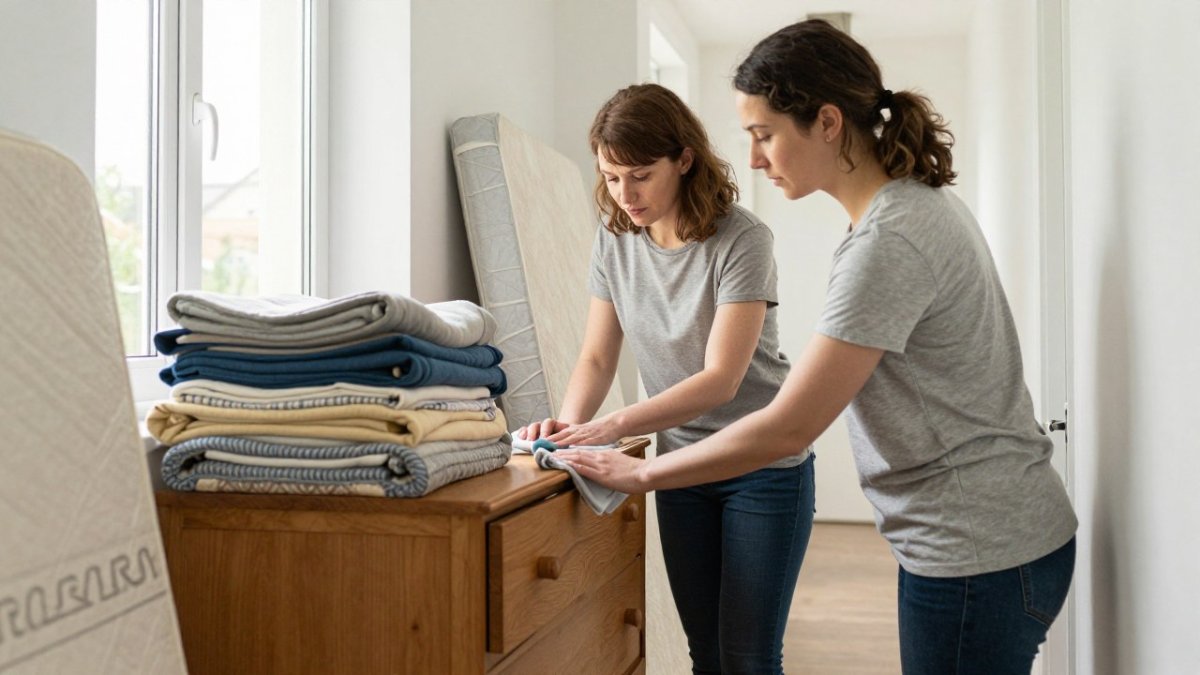
What charities and reuse schemes actually check
Most furniture reuse organisations work to a short list of conditions, and knowing them in advance is the difference between a successful collection and a wasted slot:
- Fire safety labels. Upholstered furniture sold in the UK must carry a fire safety label. Check the label under the seat cushion or on the frame before you arrange anything.
- Structural integrity. Frames must be sound, joints tight and drawers running. A charity will not take on a repair job it cannot sell.
- Cleanliness. Stains, pet hair, smoke odour and mould are the most common reasons for refusal. Wipe hard surfaces, vacuum upholstery and air the item before collection.
Preparing an item for donation or resale
Work through this sequence before you book a collection or list an item:
- Clean and dry it. Wipe all surfaces with a damp cloth and a mild cleaner, vacuum upholstery and leave the item to dry fully. Damp furniture grows mould in storage.
- Check and photograph the fire label on any upholstered item, and photograph the item itself from several angles for the listing or the charity's assessment.
- Measure the item and the route out. Measure the item, then measure doorways, stairwells and the turn at the bottom of the stairs. A sofa that will not clear the hall is a refusal waiting to happen.
- Decide whether to dismantle. Flat-pack items can often be broken down to make removal easier, but keep the fixings in a bag taped to the item so it can be reassembled.
- Confirm the collection arrangement. Ask whether the charity collects, whether there is a minimum item value or quantity, and whether volunteers will enter the property or need the item left outside.
Watch out: check the fire safety label on upholstered furniture before you arrange a pickup.
Collection arrangements and access
Charities and reuse schemes vary in how they collect. Some send volunteers who will carry items out; others will only take items left at the door or in a garage.
If a charity cannot take the item, do not default to disposal. List it on a local marketplace or offer it through a community reuse group first, then move to material recovery only when reuse has genuinely been ruled out.
Booking a Bulky Waste Collection Through Your Local Council
A council bulky waste collection is a booked service where your local authority sends a crew to collect large items, usually for a fee. Booking is often done through your council's website.
The process is broadly the same everywhere:
- Find your council's bulky waste page and check the accepted items list
- Choose a collection slot from the dates offered
- Pay the collection fee, which varies by council and by item count
- Note where the crew will collect from, usually outside the property boundary
Preparing items and knowing where to leave them on collection day
Leave items at the agreed collection point by the time stated on your booking, usually early morning. Crews will not enter your home, so items must be outside and accessible. Dismantle large pieces where allowed, and remove doors from wardrobes and appliances for safety.
Watch out: items left out before your collection day can be treated as fly-tipping. Only put them out on the day itself.
Taking Furniture to a Household Waste Recycling Centre
A household waste recycling centre is a staffed site where residents can tip bulky household items. Rules on proof of address, van access and bookings vary, so check your local centre before you load up.
Practical points:
- Check whether your centre requires a booking
- Sort items before you arrive to speed up tipping
- Ask staff where furniture and electrical items go
The Licensed Waste Carrier Check That Protects You
A licensed waste carrier check means confirming that anyone you pay to remove furniture holds a valid waste carrier licence from the environmental regulator. If they do not, and your waste is fly-tipped, you may be held responsible.
The check takes two minutes. Ask for the business name and licence number, then verify it on the official register. Our step-by-step guide on how to verify a waste carrier licence before you hire shows exactly where to look, and if you are based locally, the licensed waste carrier check in Kent walkthrough covers the same process with local detail.
Watch out: a cheap quote with no paperwork is the most common warning sign of a rogue collector. Always get the licence number in writing before anything leaves your property.
Comparing Council Collection, DIY Recycling and Private Removal
Each option suits a different situation, and the right choice usually comes down to volume, access and how quickly you need the space back.
| Option | Best for | Effort | Cost |
|---|---|---|---|
| Council collection | One or two items | Low booking effort | Fixed fee per booking |
| DIY recycling centre | Small loads with a suitable vehicle | High, you lift and drive | Free or low gate fee |
| Private removal | Full rooms, tight access, fast turnaround | Minimal | Quote based on volume |
Pricing for private removal depends on the amount, access and date, so ask for a written quote rather than a phone estimate. For local pricing context, our guide on house clearance costs in Kent explains what drives the figure up or down.
Book a Licensed Furniture Clearance for Your Kent or Medway Home
Clearing bulky furniture yourself works for a single armchair.
That is the point where a licensed clearance pays for itself. Junkmove Ltd offers licensed waste removal, same day service, and tailored clearance plans, with environmentally friendly disposal options.
If you are weighing up your options, request a quote based on what you actually have. Call now to get started with Junkmove Ltd.
The hardest part of furniture disposal is rarely the lifting.
Frequently Asked Questions
How do I arrange a bulky waste collection for furniture?
Contact your local council to book a bulky waste collection, usually online or by phone. You will be given a collection slot and told where to leave items, typically at the kerbside or an agreed collection point on your property. Fees and accepted items vary by council, so check your authority's page before booking. You may need to dismantle large pieces such as beds or wardrobes first.
Can old furniture be reused or donated instead of thrown away?
Yes, and reuse should be your first option. Charity furniture shops and local reuse schemes often accept sofas, armchairs, beds, desks and cabinets if they have fire safety labels and are in usable condition. Clean items, check for tears or stains, and photograph them before offering. Donating keeps bulky furniture out of waste streams and helps someone else furnish a home.
How can I check that a waste carrier is licensed?
Ask the carrier for their waste carrier registration number, then verify it with the environmental regulator for their area. A licensed waste carrier check is quick and can help protect you: if your waste is fly-tipped by an unlicensed collector, you may be held responsible for clearance costs. Keep a copy of the licence and a waste transfer note as proof of lawful disposal.
Can I take bulky furniture to a household waste recycling centre?
Rules differ by site, so check your council's page for opening hours, booking requirements and vehicle restrictions before you load the van. Separate wood, metal and electrical items where possible so they go into the right recycling stream rather than general waste.