 How-to
How Do You Dispose of Bulky Furniture Safely?
Last Updated: November 12, 2026
Quick Summary
You can dispose of bulky furniture through four routes: a council bulky waste collection, a household waste recycling centre, donation or resale, or a licensed clearance firm. Council collections charge a per-item fee and suit one or two items with kerbside access, while recycling centres are usually free for households but require you to transport the item yourself.
- Book your council collection before putting anything out, as early placement can be treated as fly-tipping.
- Many councils cap collections at three to six items and waits of two to six weeks are common.
- Check for a waste carrier registration number and keep a written quote and waste transfer note.
- Many recycling centres require proof of address and booking, and vans or trailers often need a permit.
- Measure doorways and stair turns before booking, and never drag heavy furniture down stairs alone.
Table of Contents
- How to Dispose of Bulky Furniture: Your Options at a Glance
- Book a Bulky Waste Collection Through Your Council
- Donate Unwanted Furniture Before You Throw It Away
- Take Furniture to a Household Waste Recycling Centre
- How to Do a Licensed Waste Carrier Check
- Compare Costs and Trade-Offs Across Disposal Routes
- Special Cases: Hazardous Parts, Flats and Tight Access
- Arrange a Licensed Bulky Furniture Clearance
- Frequently Asked Questions
How to Dispose of Bulky Furniture: Your Options at a Glance
Most people put off getting rid of a sofa or wardrobe because they assume it will be complicated. It rarely is. The exact process for how to dispose of bulky furniture comes down to four routes: a council bulky waste collection, a household waste recycling centre, donation or resale, or a licensed clearance firm.
This guide walks through each option so you can pick the one that fits your item, access and budget.
The quick comparison:
| Route | Best for | Effort | Cost |
|---|---|---|---|
| Council bulky waste collection | One or two items, kerbside access | Low | Fee per item, varies by council |
| Household waste recycling centre | Small items you can transport | High | Usually free for households |
| Donation or resale | Usable furniture in good condition | Medium | Free, sometimes collected |
| Licensed clearance firm | Multiple items, stairs, tight access | None | Quote-based |
Checklist: Prepare Before You Book Anything
Preparation decides whether a collection goes smoothly or gets refused at the door. Work through this before booking:
- Measure the item and your doorway, hallway and stair turn
- Check whether it dismantles, and keep the fixings in a bag
- Confirm the item is empty and dry
Two mistakes recur: booking before checking access, and leaving an item on the pavement days early, which can be treated as fly-tipping. Book first, then put it out the night before at the earliest.
Book a Bulky Waste Collection Through Your Council
A bulky waste collection is a paid service most councils run for large household items that won't fit in a bin. You book online or by phone, pay a fee, and leave the item at the agreed spot on the agreed date.
The steps are broadly consistent, but the detail is set locally:
- Find your council's bulky waste page and check the accepted items list before anything else
- Note the fee per item, any discounted rate for additional items, and whether payment is online only
- Check how many items you can book in one collection, many councils cap it at three to six
- Choose a collection date from the available slots; waits of two to six weeks are common in busy periods
- Pay and keep the confirmation reference and any collection reference number
- Leave the item at the stated location by the stated time, usually the night before, not earlier
Fees, item limits and time windows are set locally and change, so check your own council's page for current charges rather than relying on a figure you heard secondhand.
What Councils Accept, Reject and Charge
Most councils accept furniture, mattresses, white goods and large garden items. Most reject building waste, car parts, tyres, and anything from a business.
Accepted typically includes sofas, armchairs, beds and mattresses, wardrobes, tables, fridges, freezers, washing machines and other household appliances.
Charges vary widely, usually a per-item fee with a discounted rate for extra items booked at the same time.
Eligibility, Limits and Restrictions
The collection is for householders, and councils check. Common restrictions include:
- The item must have been used in the home you are booking from
- You may need proof of address, and some councils check council tax records
- Items left by a previous occupant or a landlord's clearance may be refused
Watch out: booking a collection for items you did not generate, for example, waste left behind by a tenant or a trader, can lead to the booking being cancelled without a refund.
Collection Dates, Time Windows and Where to Leave Items
Collection dates are usually offered as a slot rather than a precise time, often a morning or afternoon window, and some councils give only a date. You will normally be told to leave items at the kerbside or property boundary by a set time, commonly 6am or 7am on collection day.
Where you leave the item matters. Putting it out days early can be treated as fly-tipping, and leaving it on a neighbour's land or blocking a pavement can lead to refusal.
Changing, Cancelling or Missing a Collection
Most councils allow you to amend or cancel a booking up to a set number of working days before collection, often 48 hours. Refund rules vary, some refund in full, some charge an administration fee, and some do not refund at all.
If the crew does not turn up, check your booking confirmation first. Common reasons include the item not being out on time, not matching what was booked, or access being blocked.
Donate Unwanted Furniture Before You Throw It Away
Usable furniture should never go to waste. A solid table or a clean sofa has value to someone, and donating it keeps it out of the waste stream entirely.
Charity shops are the obvious route, but many only take items in saleable condition and some offer collection for larger pieces.
Before you list or donate:
- Clean the item properly and photograph it in good light
- Be honest about wear, stains or missing parts
- State clearly whether the buyer or charity must collect
The Charity Retail Association guidance on donating goods is a useful check on what shops can and cannot accept.
Take Furniture to a Household Waste Recycling Centre
A household waste recycling centre is the free route for items you can transport yourself. Most centres accept household furniture and appliances from domestic households at no charge, but the rules around who can use them and what they can bring have tightened in recent years.
The trade-offs are real: you need a suitable vehicle, you load and unload yourself, and you check the centre's rules before you travel. Many sites require proof of address, restrict van access, and operate booking systems.
Practical points to check before you set off:
- Opening hours, which often differ from shop hours and may be shorter in winter
- Whether booking is required, many sites now use a booking system even for cars
- Whether the site accepts your specific item, as some do not take certain upholstered items or large appliances
Vans, Trailers and Permits
A van or trailer often triggers extra checks or a commercial waste assessment. Many councils require a permit for van and trailer users, and some limit visits per year or trailer size.
If you are hiring a van for a house move and adding a tip run, confirm the rules first. Some sites treat a hired van as commercial regardless of what you are carrying, and a few require the hire agreement to be shown at the gate.
What Happens on Site
Once you are in, staff direct you to the right container. Skips are segregated, and putting an item in the wrong skip can contaminate a recycling stream.
This is also where reuse and recycling diverge.
Watch out: some centres refuse upholstered furniture that does not carry the correct fire safety label, so check before you load a sofa into a car.
If You Are Turned Away
Being refused at the gate is common and usually fixable. The usual reasons are no proof of address, a vehicle that needs a permit, an item the site does not accept, or arriving outside a booked slot. Ask staff which rule applied and what would resolve it, usually a permit application or a booking, not a permanent bar. If the site genuinely cannot take your item, the council collection and licensed clearance routes are the fallback.
How to Do a Licensed Waste Carrier Check
Anyone you pay to take waste away should hold a waste carrier registration. Checking it takes only a few minutes.
A licensed waste carrier check means confirming a company's registration with the environmental regulator before you hand over any item.
Red flags to watch for:
- A refusal to provide a registration number
- Cash-only pricing with no paperwork
- A price far below every other quote
Always get a written quote and a waste transfer note. Keep both. If a trader cannot show registration, walk away.
Compare Costs and Trade-Offs Across Disposal Routes
The cheapest route is rarely the easiest, and the easiest is rarely the cheapest. Weigh total cost, not just the headline fee.
| Route | Upfront cost | Your time | Risk if it goes wrong |
|---|---|---|---|
| Council collection | Per-item fee | Low | Item refused if not as described |
| Recycling centre | Usually free | High, plus vehicle hire | Turned away without proof of address |
| Donation | Free | Medium | Item refused on condition |
| Licensed clearance | Quote-based | None | Low, with paperwork in place |
Council collection is best value for one or two items with easy kerbside access. A recycling centre suits a small item and a free weekend. Donation wins when the item is genuinely reusable. A licensed clearance firm makes sense for a whole room, stairs, or no way to move the item yourself.
Special Cases: Hazardous Parts, Flats and Tight Access
Some items need more care than a standard kerbside booking allows. Fridges, freezers and anything with refrigerant gases need specialist handling.
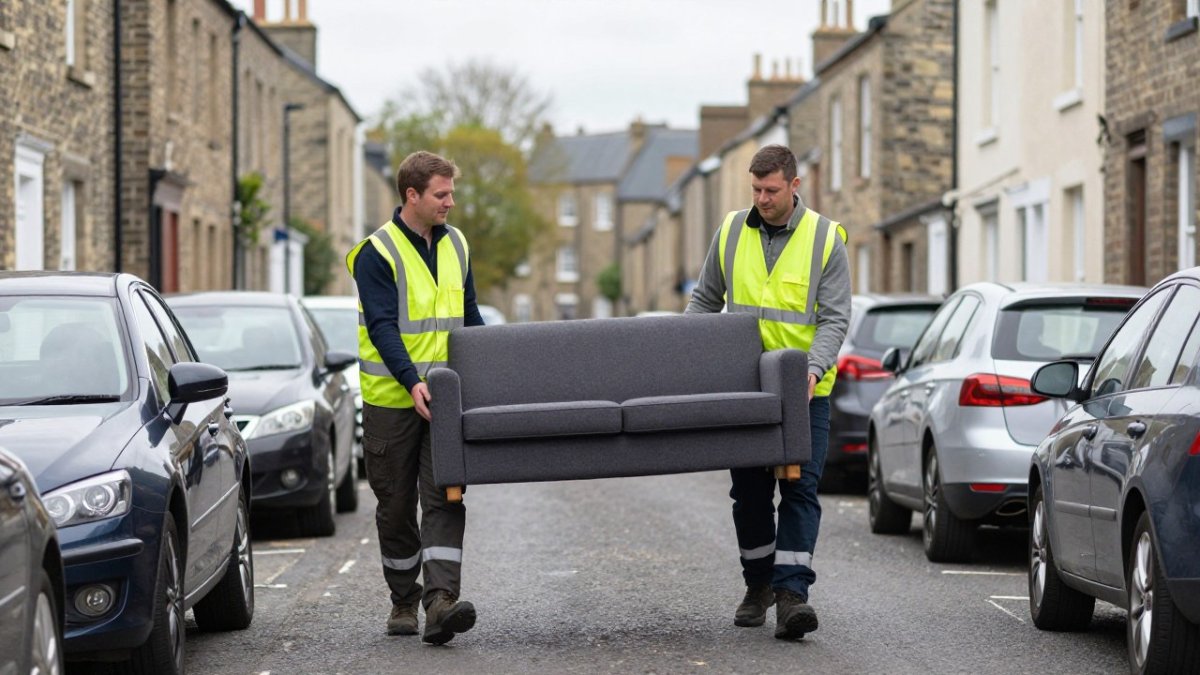
Flats and terraced streets bring access problems. A sofa that fits a doorway may not clear a stair turn.
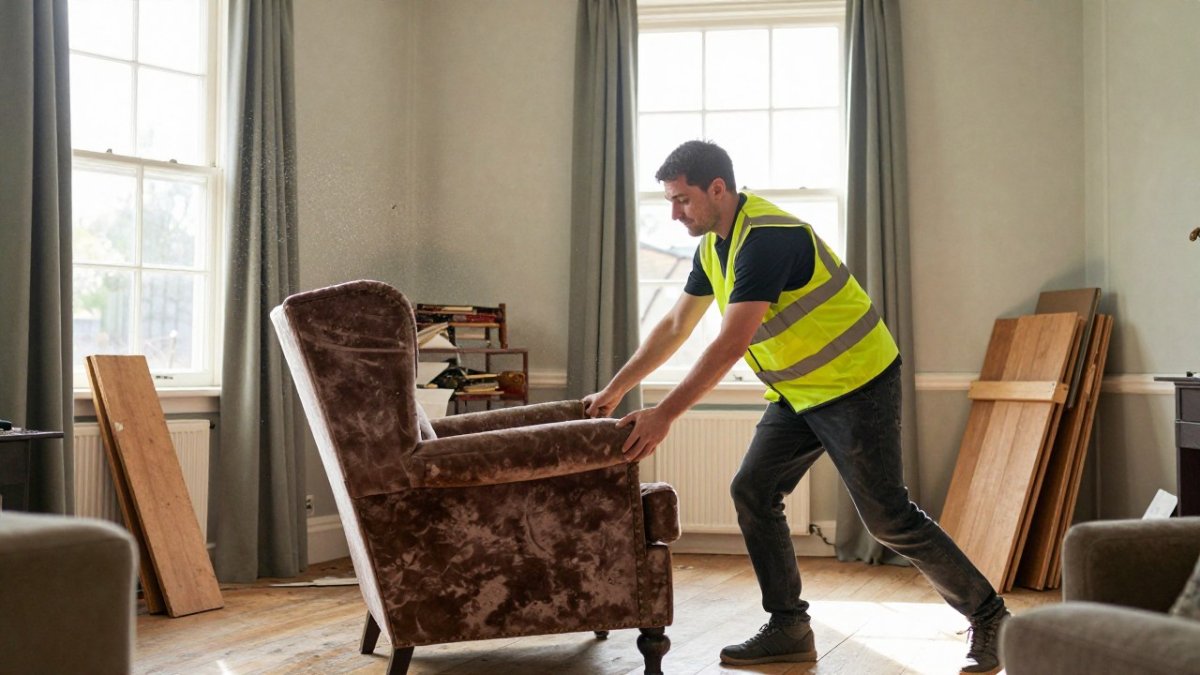
For heavy items, plan a two-person lift. Never drag furniture down stairs alone. If access is genuinely tight, a licensed clearance team will have the straps, trolleys and insurance to handle it.
Arrange a Licensed Bulky Furniture Clearance
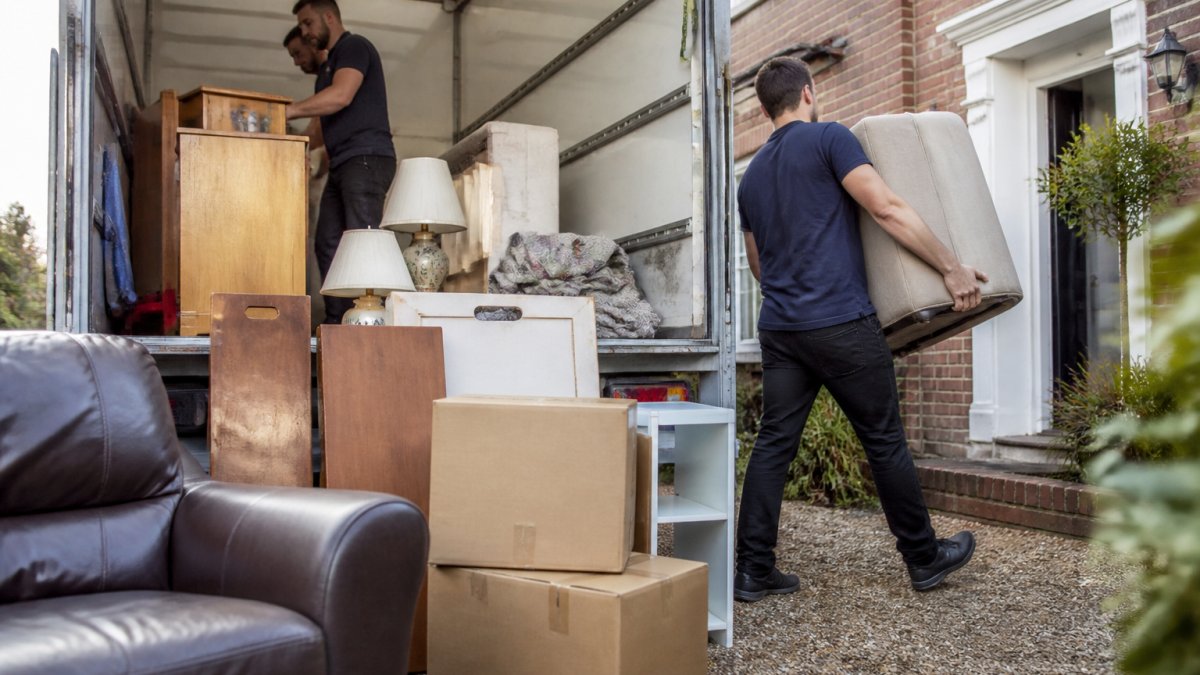
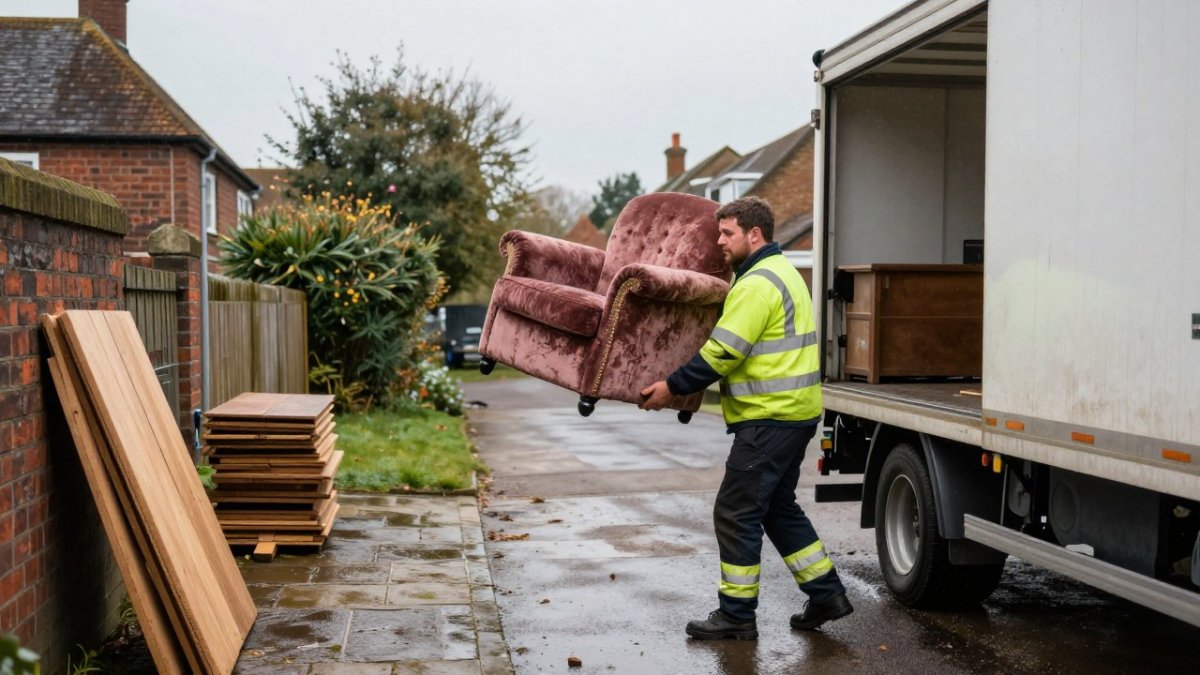
When the item is too big, too heavy, or there is simply too much of it, a licensed clearance service removes the problem in one visit. Junkmove Ltd handles house and rubbish clearances across Kent, Rochester and the Medway area, and offers same day service.
What you get:
- A tailored clearance plan based on what you actually have
- Licensed waste removal
- Environmentally friendly disposal options
You get a quote before we start, so there are no surprise charges on the day.
If you are staring at a room full of furniture and no clear way to move it, that is exactly the job we do. Get started with Junkmove Ltd and reclaim your space with a licensed, sustainable clearance.
Frequently Asked Questions
Can I leave bulky furniture outside for collection?
Only leave items out at the time and place your council specifies. Most councils ask for furniture to be put at the kerbside or an agreed access point by a set time on collection day, not days in advance. Leaving sofas or mattresses on the pavement early can be treated as fly-tipping, and you could face a fixed penalty. If you live in a flat or terraced house, tell the council about parking and access when you book so the crew knows where to find the items.
Will my council collect large furniture?
Most councils run a bulky waste collection service for large household items such as sofas, beds, mattresses, fridges and washing machines. You usually need to book in advance, list each item, and pay a per-item charge or a discounted rate for multiple items. Some councils limit the number of items per booking. Check your council's accepted items list before paying, because upholstered furniture without a fire safety label or items left outside the agreed spot may be refused.
How do I check whether a waste carrier is licensed?
Ask the company for its waste carrier licence number, then check it against the public register held by the environmental regulator. A licensed waste carrier check takes a few minutes. Keep a copy of the licence details and a receipt. If a trader cannot provide a licence number or offers to take waste away cheaply with no paperwork, walk away, because you remain responsible if your furniture is fly-tipped.
Can unwanted furniture be donated or reused?
Yes. Charity shops, reuse organisations and online marketplaces such as Freecycle accept furniture that is clean, complete and safe to use. Donate unwanted furniture before booking a collection, because reuse keeps items out of the waste stream and may save you a fee. Upholstered items usually need a fire safety label to be accepted by charities. Photograph the item, note any marks honestly, and arrange a collection or drop-off that suits the organisation's opening hours.