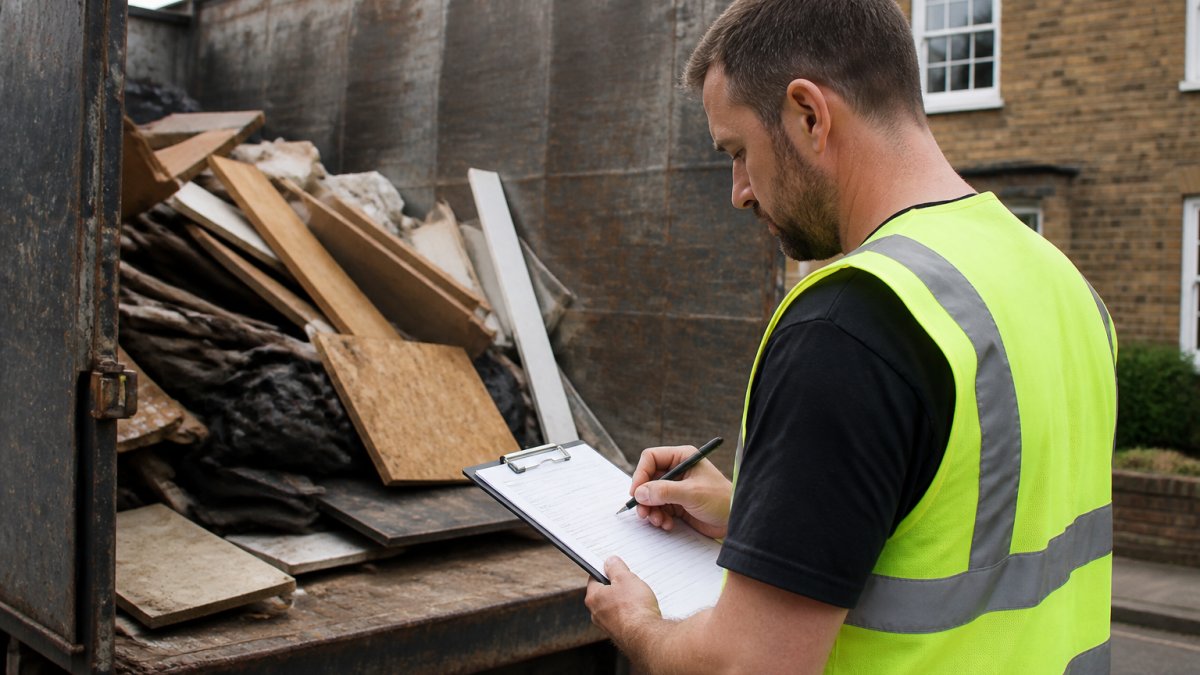
 How-to
Fast House Clearance for Property Sales: 2026 Guide
Table of Contents
- Why Fast House Clearance Matters When Selling a Property
- Your House Clearance Checklist Before the Sale
- How Long Does a House Clearance Take?
- House Clearance Cost: What Drives the Quote
- How to Choose a Licensed House Clearance Company
- Preparing the Property for Viewings After Clearance
- Fast Sale Options: Cash Buyers and Completion Speed
- Conclusion
- Frequently Asked Questions
Last Updated: October 21, 2026
Why Fast House Clearance Matters When Selling a Property
Fast house clearance for property sales is the process of emptying a home of furniture, rubbish and unwanted belongings quickly so it can go on the market without delay.
Why? Buyers struggle to see past clutter. A packed room looks smaller, darker and harder to imagine as their own.
There is a practical side too. A clearance lets you check for damage, damp or repairs before photos are taken.
Speed matters most when a sale is already moving.
Your House Clearance Checklist Before the Sale
A house clearance checklist keeps the job moving in the right order. Work through it room by room, and you avoid the classic mistake of clearing the kitchen first and then having nowhere to put the boxes from upstairs.
Here is the order we recommend:
- Set a target date. Work backwards from your listing date or completion date.
- Book the clearance. Get the date locked in before you start sorting.
- Sort room by room. Use the four piles below.
- Photograph anything of value. Do this before it leaves the house.
- Clear the loft, shed and garage. These are always bigger jobs than people expect.
- Do a final sweep. Cupboards, under stairs, behind furniture.
- Clean once it is empty. Much easier with nothing in the way.
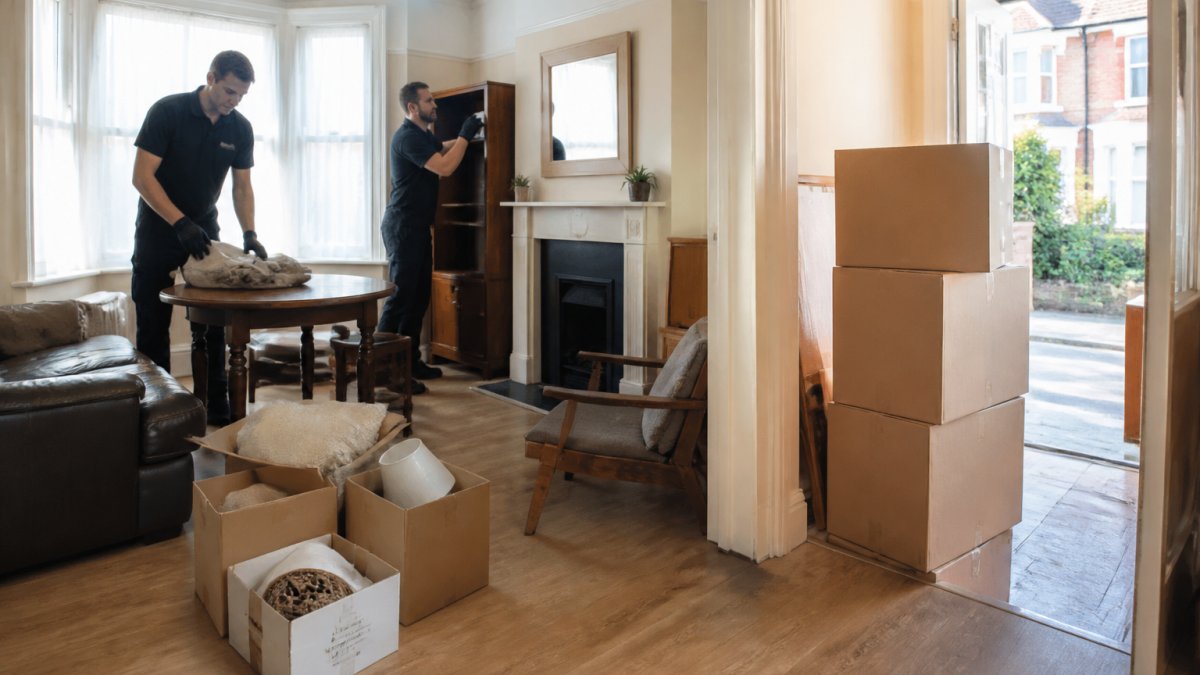
Room-by-Room Sorting: Keep, Sell, Donate, Dispose
The four-pile method is the fastest way to sort a house. Every item goes into one of four groups: keep, sell, donate or dispose.
- Keep: anything moving with you, plus paperwork, keys and valuables.
- Sell: furniture, tools and collectables worth the effort of listing.
- Donate: clothes, books, crockery and working appliances.
Be honest about the "sell" pile. If listing an item takes longer than the money it will make, it belongs in donate or dispose.
Clearing a Former Family Home or Deceased Estate
Clearing a former family home is the hardest job on this list, and it is not really about the furniture. It is about the decisions.
A few things help:
- Do not clear alone. Bring someone who can be objective.
- Set a keep box each. Give every family member one box before the clearance starts.
- Photograph sentimental items. You can keep the memory without keeping the object.
We handle bereavement clearances regularly, and the families who plan first always find it easier. If the estate is going through probate, check what the executor needs before anything leaves the property.
How Long Does a House Clearance Take?
A house clearance usually takes between a few hours and two days for a typical home. A single van load can be gone the same day.
The main factors are:
- Volume of items. A cluttered house takes longer than a tidy one.
- Access. Stairs, tight streets and no driveway all add time.
- Garden and outbuildings. Sheds, garages and greenhouses hold more than people think.
If you are selling and need the property empty quickly, tell the clearance company your deadline when you book. A good provider will plan the crew size around it rather than turning up with one van and hoping.
House Clearance Cost: What Drives the Quote
House clearance cost depends on volume, access, waste type and how quickly you need it done. There is no single price, and any company quoting a fixed figure over the phone without seeing the property is guessing.
As a working guide, most practitioners find a single large item or a part-load collected from one room falls in the low hundreds of pounds, a typical two- to three-bedroom house clearance sits in the mid-hundreds to low thousands, and a large or heavily cluttered property with outbuildings can run higher again.
What actually moves the quote:
- How much there is. A few items versus a full house. Volume is the biggest single factor.
- How heavy it is. Soil, rubble, white goods and gym equipment cost more to move and process than light furniture.
- Access and parking. Long carries, stairs, tight streets and permit requirements all add labour. A ground-floor flat with a driveway is a different job from a top-floor flat on a restricted street.
What a Written Quote Should Itemise
A quote you can compare should state:
- The date and time window for the clearance.
- The crew size and number of vehicles.
- Whether loading and carrying are included, and from which floors.
- Whether disposal and the waste carrier charge are included.
- Which items are excluded (hazardous waste, asbestos, clinical waste).
- The recycling and disposal route.
- Payment terms, cancellation terms and what happens if access is refused.
Ask for the quote in writing and compare like for like. A cheap headline figure that excludes disposal is not cheaper once the disposal charge is added.
Questions to Ask Before You Book
- Is the waste carrier registration number on the quote?
- Where will the waste be taken, and can I have a waste transfer note?
- What is included in the price, and what is charged extra?
DIY, Skip Hire or a Clearance Service?
Each option suits a different job. Here is how they compare:
| Option | Best for | Watch out for |
|---|---|---|
| DIY trips to the tip | Small volumes, one or two rooms | Time, fuel, tip booking rules and vehicle restrictions |
| Skip hire | Bulky waste, renovation leftovers | Permit costs, no hazardous waste, loading yourself |
| Clearance service | Full houses, probate, tight deadlines | Check the licence and disposal policy |
A skip looks cheap until you add the permit, the loading and the trips you cannot make because the skip is full. For a whole house, a clearance service usually works out simpler and faster, and it shifts the disposal duty of care to a registered carrier.
We provide tailored clearance plans built around your specific needs.
How to Choose a Licensed House Clearance Company
A licensed house clearance company is one that holds a valid waste carrier registration and can show you where your waste will go. In the UK, waste carriers must be registered with the environmental regulator, and you can check a registration before you book.
Use this checklist:
- Ask for the waste carrier registration number
- Check the registration is current
- Ask where waste is taken and how much is recycled
That last-but-one point matters. If your waste ends up dumped, you can be held responsible for it. Using an unregistered carrier is a false economy.
Preparing the Property for Viewings After Clearance
Once the property is empty, spend a day making it viewing-ready. This is the step most sellers skip, and it costs them offers.
- Clean everything. Windows, skirting boards, oven, bathroom grout.
- Fix small faults. Dripping taps, broken handles, cracked tiles.
- Air the house. Empty homes smell stale.
Empty rooms can look bare in photos. A few neutral touches, like a plant or a lamp, help buyers read the space. The goal is a home that looks cared for, not a house that looks abandoned.
Fast Sale Options: Cash Buyers and Completion Speed
A cash buyer can complete a property sale in a matter of weeks, while a standard sale with a mortgage often takes several months. That speed is the main appeal, and it comes at a price.
Here is what to weigh up:
| Route | Typical speed | Trade-off |
|---|---|---|
| Standard sale via estate agent | Several months | Best price, but slower and less certain |
| Cash buyer | Weeks | Lower offer, fewer delays |
| Auction | Fixed timetable | Certainty, but a discount is priced in |
How a Cash-Buyer Offer Is Actually Structured
A cash-buyer offer is usually below market value because the buyer is pricing in speed, certainty and the cost of resale. The headline figure is rarely the final figure. Common features to look for:
- A reduction clause. Some offers allow the buyer to reduce the price after survey or legal review. Ask what triggers a reduction and by how much.
- A reservation fee or exclusivity period. Some buyers charge a fee to take the property off the market, and some lock you in for a set period.
- Proof of funds. Ask for evidence the money exists, not just a statement that the buyer is a cash buyer.
What Actually Makes a Sale Fast
Completion speed comes from removing the things that slow a standard sale: mortgage applications, survey negotiations, chain dependencies and slow conveyancing. A cash sale removes the mortgage and the chain, but it does not remove conveyancing. Searches, title checks and enquiries still have to happen, and they take time.
You can help the process along by:
- Having the title documents, EPC, guarantees and service records ready before you accept an offer.
- Answering conveyancing enquiries promptly and in full.
- Clearing the property before exchange, so there is no last-minute removal to delay completion.
Safeguards Before You Sign
Before you sign with any fast-sale buyer:
- Check the company is registered and has a real address.
- Read the offer terms, especially any reduction clauses and fees.
- Ask for proof of funds.
A fast sale suits probate, downsizing and chain-free situations. If you have time, a standard sale usually nets more. If you do not, the right clearance date is the one that gets the property empty before exchange, not after.
Conclusion
The hardest part of selling a cluttered property is not the paperwork. It is standing in a full house and not knowing where to start.
At Junkmove Ltd, we handle house clearances across the region with licensed waste removal, same-day service where available, and tailored clearance plans built around your sale date. We sort, recycle and dispose responsibly, so the property is empty and ready for viewings.
Frequently Asked Questions
How quickly can a house clearance be arranged before a property sale?
It depends on the provider and the volume of items. Many licensed house clearance companies can survey within a few days and complete a typical three-bedroom property in one to two days once booked. If you are working to a sale deadline, tell the company your completion date upfront and ask for a written schedule. Booking early matters most in spring and summer, when clearance firms are busiest and same-week slots fill up. Confirm the date in writing before you accept any offer on the property.
What should I remove from a house before putting it up for sale?
Clear out anything that makes rooms feel smaller or more cluttered: bulky furniture, excess storage boxes, old appliances and personal items that distract buyers. Leave neutral fittings and anything included in the sale, such as integrated appliances or curtain rails. A house clearance checklist helps here, separating items to keep, sell, donate or dispose of room by room. Once cleared, give the property a deep clean so viewings show the space at its best.
How do I know a house clearance company is properly licensed?
Ask for the company's waste carrier registration and check it against the public register held by the environmental regulator before you book. A licensed house clearance company should also confirm where waste goes and provide a waste transfer note after the job. Keep that note, because if your waste is fly-tipped you can be held liable without it. Never pay cash to an unlicensed collector who knocks on the door offering a cheap clearance.
Can a house clearance help a property sell faster?
A cleared, clean property usually photographs better and shows its true size, which helps it attract interested buyers and supports the asking price. Empty rooms let viewers judge layout and condition rather than being distracted by clutter. Clearing before viewings also reduces the risk of a buyer negotiating down over rubbish removal. Combine the clearance with minor repairs and a deep clean, and the property is ready to market without delays between offer and completion.