 How-to
Licensed Waste Carrier Check in Kent: Step-by-Step
Table of Contents
- Why a Waste Carrier Check Matters Before You Book a Clearance
- How to Check Waste Carrier Registration on the Public Register
- Checking the Waste Carrier Registration Number and Status
- Match the Details: Business Name, Site and Permitted Activities
- The Waste Transfer Note: Paperwork That Proves Disposal
- What to Do If a Waste Carrier Is Unregistered
- Scams, Fake Details and Quotes That Are Too Low
- Conclusion
- Frequently Asked Questions
Last Updated: October 19, 2026
Why a Waste Carrier Check Matters Before You Book a Clearance
A licensed waste carrier check in Kent takes about five minutes and costs nothing. It is the single most useful thing you can do before handing over a deposit or letting anyone drive away with your rubbish.
Here is the uncomfortable truth. If your waste ends up dumped on a country lane, the duty of care sits with you, the waste producer. Paying someone cash does not transfer that responsibility. The Environment Agency treats household waste and commercial waste the same way in this respect.
So before you book a house clearance, a builders' skip or an office fit-out removal, run a waste carrier check. Below, we walk through the exact steps, what the register does and does not tell you, and what to do when the details do not add up.
How to Check Waste Carrier Registration on the Public Register
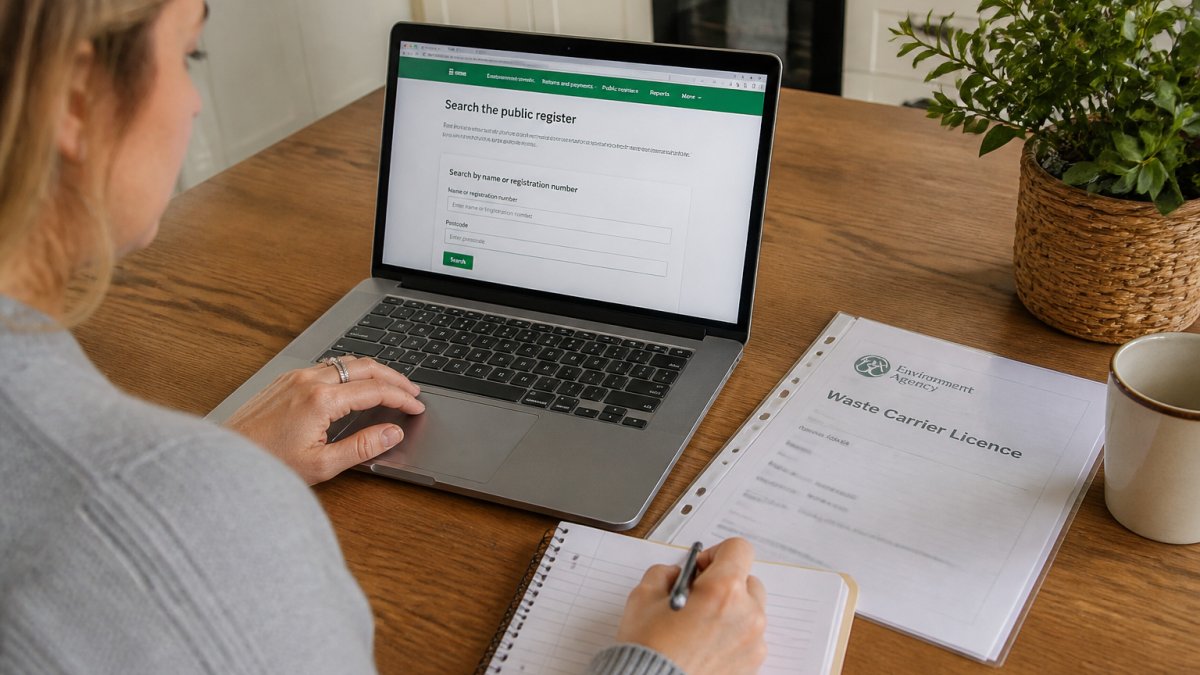
The public register is free, online and maintained by the Environment Agency. You can search it in minutes, and you do not need an account. The register lists waste carriers, brokers and dealers, and it is the same national dataset whether you are in Kent or anywhere else in England.
Here is the process, step by step.
- Open the Environment Agency's public register search for waste carriers, brokers and dealers.
- Enter the business name or the registration number. A company name alone is often enough, but the registration number is more precise.
- Filter by registration type if you have a choice between carrier, broker and dealer.
- Open the matching record and read every field, not just the green tick.
- Save a screenshot or PDF of the result with the date visible.
That last step matters. If a dispute arises later, a dated record of what you checked protects you.
What You Need Before You Start the Search
Gather these details first, so the search is quick and accurate:
- The trading name the company uses on its quotes and van signage
- The registered business name, if different
- Any registration number printed on their paperwork
- The company address they have given you
- The site or depot they say they operate from
A common mistake is searching only the trading name. Plenty of firms trade under a name that differs from their registered company name, and the register may list either. If a search on the trading name returns nothing, try the registered company name and the registration number before concluding the firm is unregistered.
Reading the Search Results Correctly
A match on the register is a starting point, not a finish line. Work through each field on the record and compare it to what the firm has told you.
Registration status. The record will show whether the registration is active, expired or refused. An expired registration is not a valid registration, whatever the van says.
Registration category. The register distinguishes between carriers, brokers and dealers, and some businesses hold more than one category. A carrier is authorised to transport waste.
Business name and trading name. Check that the name on the register matches the name on your quote and the name on the van.
Registered address. The register lists a registered address for the business.
Registration expiry date. Registrations are time-limited and must be renewed. Check that the expiry date is in the future.
Permitted activities and site details. Where the record lists the sites or depots the business operates from, compare them to the address the firm gave you.
What the Register Does Not Tell You
The register confirms that a business is on the Environment Agency's list of waste carriers, brokers and dealers. It does not confirm that the business will dispose of your waste lawfully, that its vehicles are insured, that it has a good track record, or that the destination facility it uses holds the correct environmental permit. Those are separate checks, and the sections below explain how to make them.
Checking the Waste Carrier Registration Number and Status
A waste carrier registration number is the fastest way to confirm a firm is on the register. Ask for it in writing before you book.
Most legitimate operators will give it without hesitation. If someone dodges the question, that is your answer.
What the number tells you:
- Whether the business is currently registered
- Which tier of registration they hold
- When the registration expires
- What activities they are permitted to carry out
What it does not tell you:
- Whether they actually dispose of waste responsibly
- Whether their vehicles are insured
- Whether they have a history of fly-tipping
Match the Details: Business Name, Site and Permitted Activities
The details on the register must match the details on the quote. If they diverge, ask why before you pay anything.
Run through this checklist:
- Business name on the register matches the name on the quote
- Trading name matches the van signage or website
- Registered address is a genuine business location
- Registration status is active
- Registration category covers waste collection and transport
- Registration expiry date is in the future
- The site or depot they named appears on the record
- They can explain any mismatch in writing
That last point is the one most people skip. A different trading name is common and usually harmless. A different registered address with no explanation is not.
If the details do not match, ask for clarification in writing. A legitimate firm will explain the difference between a registered name and a trading name without fuss. A firm that gets defensive, changes the subject or pressures you to book today is telling you something useful.
The Waste Transfer Note: Paperwork That Proves Disposal
A waste transfer note is the document that records what waste moved, from where, to where, and who handled it. It is your proof that the waste was accounted for.
For household clearances, you should receive a copy. For commercial work, keeping transfer notes is a legal requirement under duty of care rules. The note should include:
- A description of the waste
- The quantity or volume
- The address it was collected from
- The name and registration details of the carrier
- The destination facility and its environmental permit reference
- The date and signatures of both parties
Ask where the waste is going before you book. A firm that cannot name the authorised facility it uses is a firm to avoid.
What to Do If a Waste Carrier Is Unregistered
If a waste carrier is unregistered, do not hand over your waste or your money. Walk away and report it. But 'unregistered' is not always a clean yes or no. In practice, most problems fall into four categories, and each needs a different response.
The record is missing entirely
If a search on the trading name, the registered company name and any registration number returns nothing, treat the firm as unregistered. Do not book. Ask the firm in writing for its registration number and the name it is registered under. A legitimate operator will supply both without hesitation. If the firm cannot or will not, walk away.
The record is expired
An expired registration is not a valid registration. The firm may be in the process of renewing, but until the register shows an active status, it cannot lawfully carry waste. Ask for written confirmation of the renewal date and re-check the register before you book. If the clearance is urgent, use a different operator rather than relying on a promise that the renewal is 'in hand'.
The details do not match
This is the most common and most ambiguous situation. The register may show a different business name, a different address, or a different registration category from what the firm told you. Some mismatches are harmless, a trading name that differs from the registered company name is normal. Others are not. Ask the firm to explain any mismatch in writing before you book. A legitimate firm will explain the difference between a registered name and a trading name without fuss. A firm that gets defensive, changes the subject or pressures you to book today is telling you something useful.
The record is ambiguous
Sometimes a search returns several similar records, or a record with incomplete site details. In that case, ask the firm to confirm in writing which registration number applies to the work you are booking, and check that number against the register yourself. Do not rely on a screenshot the firm sends you, because a screenshot can be edited or copied from another business.
Scams, Fake Details and Quotes That Are Too Low
A quote that is far below everyone else's is a warning sign, not a bargain. Legitimate disposal costs money: gate fees, fuel, staff time and compliance. A price that undercuts the market by a wide margin usually means the waste is not going to a permitted site.
Watch for these patterns:
- Cash-only payment with no receipt offered
- No written quote, or a quote with no company details
- A registration number that does not appear on the register
- A van with no signage and no company name
- Pressure to book immediately
- Reluctance to say where the waste will be taken
Impersonation is common. Someone copies a real firm's registration number onto their own invoice. The only defence is searching that number yourself.
Conclusion
The register check is five minutes of work that protects you from a fine, a fly-tipping investigation and a lot of stress.
At Junkmove Ltd, we hold a Waste Carriers Licence and provide the paperwork that proves where your waste goes. Our team handles house clearances, builders' waste and commercial removals, with same-day service available and tailored clearance plans built around recycling, composting and waste-to-energy routes.
Call us to book a clearance and get a licensed, documented removal from start to finish.
Frequently Asked Questions
How do I check if a waste carrier is registered?
Ask the company for its waste carrier registration number, then search the public register maintained by the Environment Agency. Enter the registration number or business name and confirm the entry is current, not expired. Check that the registered business name, trading name and address match what the company told you. A waste carrier check takes a few minutes and should be done before you hand over any waste or pay a deposit.
What details do I need to check a waste carrier's registration?
You need the company's registered business name, trading name, waste carrier registration number and the address on its paperwork. With those you can search the register and compare the results line by line. Note the registration status and expiry date, the registration tier, and the registered site. If any detail does not match, ask the company to explain before booking.
What should I do if I cannot find a carrier on the register?
Do not book them. An unregistered operator cannot lawfully transport your waste, and you could be held responsible if it is fly-tipped. Ask for their registration number in writing and search again. If they cannot supply one, walk away and choose a licensed provider. You can also report suspected illegal waste activity to the Environment Agency.
What paperwork should I keep after a waste collection?
Keep the waste transfer note for at least two years. It should show the date, the waste description, the quantity, the carrier's registration number and both parties' details. Store it with your quote or invoice. For business waste, a consignment note applies to hazardous material. If a company promises recycling, ask for evidence of where the waste went.