 How-to
How to Get Rid of Old Furniture Legally and Responsibly
Quick Summary
The best way to dispose of old furniture depends on its condition, size and urgency. Usable pieces can go to a charity or reuse scheme, while large or damaged items suit council bulky waste collection, a recycling centre or a licensed private removal service.
- Donate clean, intact furniture to charities, which is free but declines damaged or unhygienic items.
- Council bulky waste collection usually charges a fee and requires booking, often weeks ahead.
- Household waste recycling centres need a vehicle large enough for the load and can accept many furniture items.
- Check that a private removal firm holds a valid waste carrier licence before booking.
- Keep the waste transfer note or receipt from any removal firm as evidence of lawful disposal.
Table of Contents
- Choosing the Right Disposal Route for Your Furniture
- Using Bulky Waste Collection From Your Council
- Taking Furniture to a Household Waste Recycling Centre
- How to Recycle Furniture and Which Materials Can Be Reused
- Donating Unwanted Furniture to Charities and Reuse Schemes
- Using a Private Removal Service and Checking It Is Licensed
- Booking Your Old Furniture Clearance This Week
- Frequently Asked Questions
Choosing the Right Disposal Route for Your Furniture
Last Updated: November 17, 2026
Getting rid of old furniture is simple only when you know which route suits the piece. The best way to dispose of old furniture depends on its condition, its size and how quickly you need it gone. Start by asking three questions: is it still usable, is it too large for a standard bin, and do you need it removed this week?
Furniture in good condition can often be reused. Sofas, wardrobes and dining sets that are clean and intact are commonly accepted by charity shops and reuse schemes. Damaged, stained or heavily worn pieces usually need a council collection, a recycling centre or a licensed removal service. Mixed loads, such as a house clearance, often need more than one route.
Use this summary to compare the main options:
| Route | Best for | Typical cost | Speed | Main limitation |
|---|---|---|---|---|
| Council bulky waste collection | Large, household items | Usually a fee per collection | Booked dates, often weeks ahead | Fixed collection days |
| Household waste recycling centre | Items you can transport yourself | Often free, check local rules | Whenever the site is open | Needs a vehicle and carrying |
| Donation or reuse scheme | Clean, usable furniture | Free | Depends on the charity's pickup | Items must be in good condition |
| Private removal service | Full clearances, urgent jobs | Quoted per job | Often same day or next day | Costs more than council routes |
Pros and cons at a glance:
- Council collection: Low cost and fully lawful, but you must wait for a booked date and the item must fit the council's limits.
- Recycling centre: Useful for items you can carry, but a van or large car is usually needed for sofas and wardrobes.
- Donation: Free and keeps usable items out of landfill, but charities will refuse damaged or unhygienic furniture.
- Private removal: Hands-off, but only worth it if you verify the firm holds a valid waste carrier licence.
Many households combine routes. A usable dining table might go to a charity, while a broken sofa goes to council collection. Sorting before you book saves time and money.
Using Bulky Waste Collection From Your Council
Bulky waste collection is the standard council service for large household items such as sofas, mattresses, bed frames and wardrobes. Councils in the UK generally charge a fee per collection, and they set their own rules on which items they accept, so check your local authority's website before you book (Apply for special collection of large waste items).
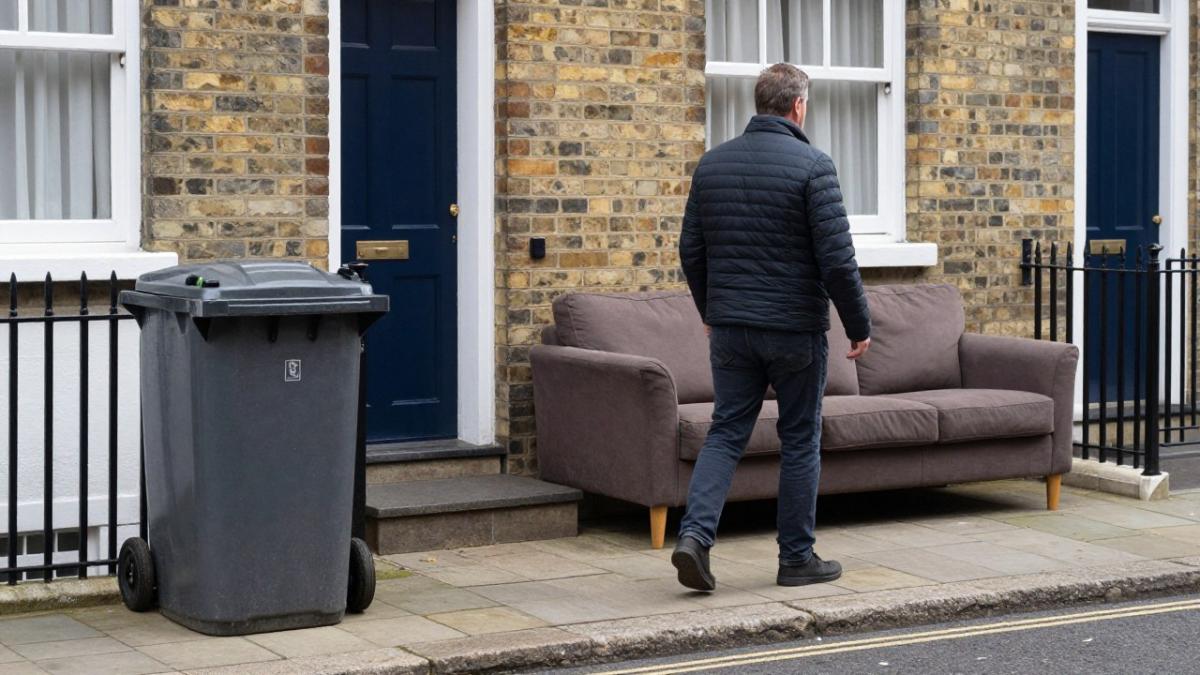
To book, you will usually need to request a collection online or by phone, choose a date and pay any fee. Some councils limit how many items you can include per booking, so it is worth counting them in advance. Put the items out on the agreed morning, not before, and keep them clear of the path and the road.
A common mistake is putting out items the council does not accept. Fridges, mattresses and some electrical goods often need separate handling, and leaving an excluded item at the kerb can mean the whole collection is refused.
Taking Furniture to a Household Waste Recycling Centre
Household waste recycling centres, sometimes called tips or HWRCs, accept many furniture and other bulky items. Many are free to use for household waste, though some councils charge for certain materials, such as rubble or plasterboard. Check your council's site for opening hours and any limits on vehicles or quantities.
Plan the trip carefully. You will need a vehicle large enough for the load, and you should secure items so they do not shift in transit. Staff can direct you to the right skip or container. Wood, metal and upholstered furniture are usually separated at the site, which helps with recycling.
Recycling centres are a sound choice for larger loads you can transport yourself. They are less suitable if you cannot lift or carry the items, in which case a removal service or council collection is a better fit.
How to Recycle Furniture and Which Materials Can Be Reused
Recycling furniture works best when you know what it is made from. Solid wood can often be sanded, painted or repurposed. Metal frames can usually go to scrap metal recycling. Upholstered items are harder to recycle, because foam, fabric and springs need separating, so they often end up in a different waste stream.
Flat-pack furniture made from chipboard or MDF is generally recycled as mixed wood, though coatings and glues can limit what is possible. Glass tops should be taken to a recycling centre with glass facilities, not placed in general waste, because broken glass is a hazard for collection crews.
If you are unsure, ask the recycling centre or your removal provider what happens to each material. Responsible handling keeps materials out of landfill and reduces the environmental impact of clearing a home.
Donating Unwanted Furniture to Charities and Reuse Schemes
Donation is often the most sustainable option for furniture in good condition, but the difference between a successful pickup and a rejected item comes down to a few specific checks. Most charities and community reuse schemes apply consistent eligibility rules, and knowing them in advance saves a wasted booking.
Condition and safety checks charities commonly apply:
- ** Items without a legible label are frequently refused because the charity cannot verify compliance.
- Mattresses are accepted by some charities and refused by many, often on hygiene grounds; check before booking.
- Flat-pack and self-assembly furniture is generally accepted only if structurally sound and complete with fixings.
- Items must be clean, dry and free of pet hair, stains, odours, mould or pest activity. Charities cannot rehome items that present a hygiene risk.
- Glass tops and mirrors should be removed or taped and labelled, as loose glass is a handling hazard.
Access and pickup requirements: Charity collections often depend on access, so the item should be reachable from the ground floor or a lift-accessible location, with a clear path to the van. Stairs, narrow doorways and restricted parking are common reasons a pickup is declined or rescheduled. Some charities ask you to have the item outside and covered on the morning of collection; others will not enter a property. Confirm the access arrangement when you book.
How to arrange a donation: Contact the charity or reuse scheme directly, many national charities list furniture collection in their shop pages, and local reuse schemes often operate through council or community networks. Provide a description, dimensions, photos and the access details. Ask explicitly whether the item needs a fire-safety label and whether the crew will collect from inside the property. Keep a note of the booking reference.
Watch out: a charity that declines an item on condition or safety grounds will not take it on the day, so have a fallback route, council collection or a licensed removal service, ready before the pickup date.
Donation keeps usable items in circulation and is free, but it is not a disposal service of last resort. If the item is damaged, stained or missing its safety label, plan for recycling or licensed removal instead.
Using a Private Removal Service and Checking It Is Licensed
A private removal service may suit full house clearances, urgent jobs, upper-floor flats and situations where you cannot move the items yourself. Pricing depends on quantity, dates, and delivery. For current prices or a quote, contact Junkmove Ltd directly through our website.
How to verify a waste carrier licence: In the UK, anyone carrying controlled waste must be registered with the relevant environmental regulator for their nation (Register or renew as a waste carrier, broker or dealer). Ask for the firm's waste carrier registration number and check it on the relevant regulator's public register before booking. A legitimate firm will provide the number without hesitation and will be able to explain where the waste is taken.
What a compliant removal should give you:
- A written quote or confirmation setting out what will be removed and the price.
- A waste transfer note (or a receipt that records the transfer) describing the waste and confirming it was passed to a licensed carrier (Duty of care waste transfer note form). Keep this, it is your evidence that you disposed of the waste lawfully.
- Confirmation that items will go to a licensed recycling or disposal site, with reuse considered first where the item is usable.
When collection is unavailable or urgent: If your council does not collect the item, the next available date is weeks away, or the property has no kerbside access, a licensed removal service is usually the fastest lawful route. For tight deadlines, a house sale completion, a tenancy end, a bereavement clearance, book a firm that offers same-day or next-day service and confirm the access plan in advance. If you cannot get a removal slot, a licensed skip hire permit arranged through the council is an alternative for smaller loads, though skips on public roads need a permit.
Watch out: a firm that cannot show a waste carrier registration or provide a waste transfer note may leave you exposed if the items are fly-tipped.
A reputable removal firm will recycle or dispose of items through licensed sites and should be able to explain where your waste goes. Verify the licence, keep the paperwork, and confirm the access plan before the crew arrives.
Booking Your Old Furniture Clearance This Week
Once you have sorted your items and chosen a route, booking is straightforward. Start with the items that have the tightest deadlines, such as a house that needs clearing for a sale. Council collections can take weeks to schedule, so if you need faster results, a private removal service may be the better choice.
Gather a list of what you need removed, note access details such as parking or stairs, and set a realistic date. Ask for written confirmation of what will be taken and how it will be disposed of. This protects you and gives you a record if questions arise later.
To arrange a clearance, contact Junkmove Ltd for a quote. Junkmove Ltd offers licensed waste removal, and tailored clearance plans for homes and businesses in the Kent area.
Clearing old furniture responsibly takes a little planning, but the right route saves money and keeps waste out of the wrong places. Junkmove Ltd can help you choose the most suitable option for your items, your timescale and your property. Call us today to book your clearance.
Frequently Asked Questions
What is the best way to dispose of old furniture?
The best route depends on condition. Furniture in good repair can usually be donated to a charity or reuse scheme, which keeps it out of landfill. Items that are broken or unhygienic usually need a council bulky waste collection, a visit to a household waste recycling centre, or a private removal service. Many councils charge a fee for bulky collections, so check current charges on your council website before booking. Whichever route you choose, make sure the item ends up with a licensed operator or an approved facility.
Can old furniture be recycled?
Many items can be recycled. Wooden furniture can often be broken down and recycled at a household waste recycling centre, metal frames can go to scrap, and upholstered pieces are harder to process. Materials vary by local facility, so check what your nearest recycling centre accepts before you travel. Furniture that is still sound is better reused than recycled, because reuse avoids the energy needed for processing.
How can I check that a waste carrier is licensed?
Ask for the carrier's waste carrier registration details and check them against the relevant public register for your nation. A legitimate carrier will state its registration or licence number on its quote and paperwork. Always ask for a waste transfer note for the items collected, as this is your record that the waste was handled through a legal route. Hand waste only to a registered carrier, otherwise you may be liable if it is fly-tipped.