 Ultimate guide
House Clearance Checklist for Homeowners: A Step-by-Step Guide
Last Updated: November 19, 2026
Quick Summary
A house clearance checklist for homeowners is a room-by-room plan that covers securing documents and valuables, sorting belongings into keep, donate, sell, recycle and dispose piles, and confirming legal authority before anything leaves the property. Preparing it in advance reduces delays, disputes and extra loads on collection day.
- Secure important documents, valuables and sentimental items in one labelled box before anything is moved.
- Work room by room, starting with easier rooms and finishing with the loft and outbuildings.
- Sort every item into keep, donate, sell, recycle or dispose, and get a valuation for anything possibly worth more than a few pounds.
- Confirm the collection company is a registered waste carrier and request a waste transfer note naming the destination.
- Route hazardous waste such as paint, batteries, gas cylinders and asbestos through approved channels, never a general skip.
Table of Contents
- How to Prepare for a House Clearance Before Anything Leaves the Property
- Room-by-Room House Clearance Checklist
- Sorting Belongings Into Keep, Donate, Sell, Recycle and Dispose
- Legal Responsibilities, Ownership Checks and Hazardous Waste Rules
- House Clearance Before Booking a Collection: Timing and Costs
- How Long a House Clearance Takes and What Affects the Duration
- Book Your Collection and Hand Over the Property With Confidence
- Frequently Asked Questions
How to Prepare for a House Clearance Before Anything Leaves the Property
A house clearance checklist for homeowners is the most useful tool you can prepare before a single item leaves the property. Most delays and disputes come from rushed decisions on collection day.
Preparation starts with a clear picture of what you are dealing with. Walk through the property with a notepad and split the job into three questions: what must be kept, what can be given or sold, and what needs proper disposal.
Assess the size and scope of the clearance
Estimate volume, not just the number of rooms. A full loft or packed garage can generate far more waste than the rest of a property.
Decide whether the clearance is partial or complete. A full house clearance usually means the property is being emptied for sale, rental or handover to an executor; a partial one might cover a single room, garage or floor.
Secure important documents, valuables and sentimental items
Before anything is moved, pull out the items that cannot be replaced. Keep these together in one labelled box or folder, and keep it with you rather than in the house:
- Property deeds, wills and solicitor's letters
- Financial records and tax papers
- Passport, driving licence and birth or marriage certificates
Sentimental belongings deserve the same care. Photographs, letters and family heirlooms are often the hardest to decide on, so set them aside for a separate review. Make a simple inventory of valuables with a photo of each item to protect you if a dispute arises later.
Room-by-Room House Clearance Checklist
Working room by room keeps the job organised and makes progress easier to track. Start with the easiest rooms, such as the kitchen and bathroom, and finish with the loft and outbuildings.
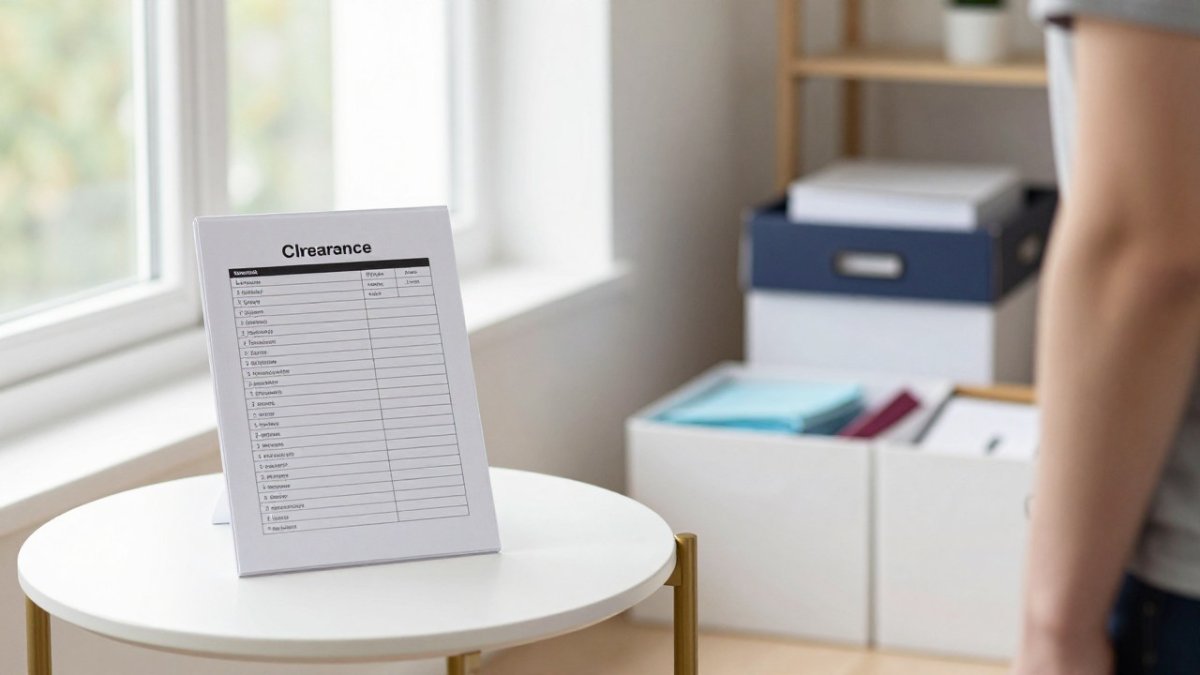
A practical checklist for each room looks like this:
- Remove personal items and check drawers, shelves and cupboard backs.
- Note any appliances, fixtures and fittings that stay with the property.
- Sort items into keep, donate, sell, recycle and dispose piles.
- Photograph the empty room once it is cleared.
- Tick the room off on your printed or digital checklist.
Keep a record of each completed room. A simple table with columns for room, date cleared, items remaining and photo reference is enough to show what was removed and when.
Lofts, cupboards, garages and sheds
These spaces hide the most unexpected items and the most waste. Check loft boards, eaves and the space behind insulation. In garages and sheds, look for old paint, solvents, fuel cans, gas bottles and garden chemicals, which need careful handling.
Cupboards under stairs and built-in wardrobes often contain forgotten boxes of paperwork. Open every door and remove the contents completely, rather than clearing only what is in front.
Furniture, appliances and other bulky items
Bulky items drive most of the cost and access problems in a house clearance. For a safe method for disposing of sofas, beds and appliances, see How Do You Dispose of Bulky Furniture Safely?
Appliances such as fridges, freezers, washing machines and ovens need special consideration. Fridges and freezers contain refrigerants and should be recycled through an authorised route. Empty and defrost them at least a day before collection.
Sorting Belongings Into Keep, Donate, Sell, Recycle and Dispose
Sorting is where a clearance is won or lost. Create five clearly marked zones or boxes before you begin, and decide on each item as you pick it up.
- Keep: Items you are taking with you, plus the documents and valuables set aside earlier.
- Donate: Clothing, books, toys and household goods in good condition. Check with local charity shops first, as they may not accept bulky or damaged items.
- Sell: Items with resale value, such as antiques, tools, furniture or collectables. Get a valuation for anything you suspect might be worth more than a few pounds.
Donating and selling reduce the total volume of waste and can offset part of the clearance cost, so allow time for them. For the legal and responsible ways to get rid of unwanted furniture, see How to Get Rid of Old Furniture Legally and Responsibly.
The five sorting categories and what each one covers are summarised below.
| Category | What goes here | Key point |
|---|---|---|
| Keep | Items you are taking with you | Include documents and valuables set aside earlier |
| Donate | Clothing, books, toys, household goods | Good condition only; check charity shops first |
| Sell | Antiques, tools, furniture, collectables | Get a valuation if worth more than a few pounds |
| Recycle | Metal, glass, paper, card, electricals | Use approved channels |
| Dispose | Broken, unsafe or unsuitable items | Includes hazardous waste |
Legal Responsibilities, Ownership Checks and Hazardous Waste Rules
Clearing a property is not simply a matter of putting items on the kerb. Two legal threads run through every clearance: who has the right to dispose of the items, and how the waste is handled once it leaves. Getting either wrong can expose a homeowner to financial liability.
Confirm your authority before anything is removed
Ownership is the first check. In an estate, possessions belong to the estate until the executor or administrator has legal authority to deal with them, normally via a grant of probate or letters of administration.
Shared ownership and joint tenancy raise similar questions. If two names are on the title, both owners should agree the clearance scope in writing. In a rented or leasehold property, the tenancy or lease may set out what the landlord owns and what must be left behind, fixtures, fitted appliances and some garden structures are common examples.
Check the waste carrier, not just the quote
The person who produces or holds waste has a duty of care under the Environmental Protection Act 1990 to ensure it is handled responsibly (Waste duty of care: code of practice (accessible version)). The Environment Agency publishes a public register of waste carriers, brokers and dealers, searchable by company name or registration number (Waste Carriers, Brokers and Dealers).
Ask also where the waste is going. A legitimate operator should be able to name the permitted site or transfer station and provide a waste transfer note describing the waste and confirming its destination. Keep that note as your evidence that you met the duty of care.
Route hazardous waste item by item
Hazardous waste needs particular care because it cannot go in general waste skips or household bins. The practical routes are:
- Paint, solvents, pesticides and garden chemicals: take them to a local authority household waste recycling centre that accepts hazardous household waste, or use a council-arranged collection. Do not pour them down drains or put them in a skip.
- Batteries: separate them from general waste. Most supermarkets and many recycling centres accept household batteries, and lithium batteries in particular should never be crushed or punctured.
- Electricals and electronic equipment: recycle through a local authority site or a retailer take-back scheme. Fridges and freezers contain refrigerants and need an authorised route.
Watch out: mixing hazardous items into a general skip can invalidate the carrier's permit and leave you liable for the cost of separating and disposing of the load correctly.
House Clearance Before Booking a Collection: Timing and Costs
Pricing depends on quantity, dates, access and the types of waste involved, so there is no single figure for every property. Understand the factors that move a quote up or down, and ask the right questions before booking. For current prices or a quote, visit the Junkmove Ltd website.
What drives the quote
Most clearance quotes are built from a small number of variables. Ask the provider to break the price down against these so you can see what is included:
- Volume and load count: the number of van loads or the cubic volume of items. A full loft or packed garage can add a load on its own.
- Access: stairs, narrow hallways, lifts, parking distance and whether items must be carried through a shared entrance. Poor access adds labour time.
- Item type: bulky furniture, white goods, pianos and safes take more crew and time than bagged household waste.
Extra charges to ask about
A headline figure can hide additions. Before you book, ask directly whether the quote includes:
- VAT, and whether the figure quoted is inclusive or exclusive;
- the cost of disposing of hazardous or restricted items;
- a surcharge for stairs, long carries or parking restrictions;
Get the answer in writing, ideally in the quote or a follow-up email, so there is no disagreement on the day.
Questions to ask any provider
A short list of questions separates a professional operator from a man with a van:
- Are you a registered waste carrier, and what is your registration number?
- Where will the waste be taken, and can you provide a waste transfer note?
- Is the quote fixed or an estimate, and what could change it?
- What is included in the price, and what is charged extra?
- Are you insured, and what does the insurance cover?
- How do you handle hazardous items, and is that included?
- What notice do you need, and what happens if the date changes?
Timing the booking
Book the collection once sorting is largely complete, not before. Allow time for donations and sales, and factor in any deadlines from a property sale or estate administration. Confirm parking, stairs and whether a porter or extra crew is needed.
Watch out: a quote that is dramatically lower than the others often excludes disposal, hazardous items or VAT; ask what is missing before you compare it with the rest.
How Long a House Clearance Takes and What Affects the Duration
A straightforward clearance of a small flat may take a few hours. A full house clearance, particularly one with a loft, garage and outbuildings, can take a day or more, and some jobs run across two visits.
The biggest time savers are preparation and access. A homeowner who has already sorted and labelled items, cleared pathways and agreed parking will see the job completed far faster.
Book Your Collection and Hand Over the Property With Confidence
Once the house is empty, do a final walkthrough with your checklist. Check every cupboard, the loft, the garage and the garden, and make sure nothing has been missed. Take a final set of photographs, return keys and confirm the handover in writing.
Junkmove Ltd is a licensed waste carrier serving Kent, Rochester and the Medway area, providing sustainable clearance with recycling and responsible disposal.
Frequently Asked Questions
How do I prepare my house for a clearance?
Start by walking through every room and noting what is staying, going and needing a decision. Clear access routes to the front door and driveway, and make sure stairs, hallways and loft hatches are unobstructed. Turn off and isolate any gas or electric appliances that will be removed, and arrange for utilities to be disconnected once the property is empty. Keep your checklist to hand so you can tick items off as they are sorted and collected.
What should I do before booking a house clearance?
Before you book a house clearance, take an inventory of the property, including loft, garage and shed. Locate important documents such as property deeds, wills, passports, birth and marriage certificates, and financial records, and set them aside. Photograph valuables and sentimental items so you have a record, and remove anything you intend to keep. Pricing depends on the volume, dates and delivery arrangements, so contact Junkmove Ltd or visit the website for a current quote.
How do I decide what to keep, donate, sell or dispose of?
Sort each item into one of five groups: keep, donate, sell, recycle or dispose. Items in good working order can often be donated or sold, while broken electricals, paint and chemicals need to go through recognised disposal routes. Working through a room-by-room checklist makes these decisions easier, because you can judge each area of the home against a consistent set of questions.
What items should I remove or set aside before a clearance team arrives?
Remove anything you want to keep, along with personal identification, keys, cash, jewellery, digital devices and any documents that could hold personal data. Check with the clearance provider about hazardous materials, such as paints, solvents, gas cylinders and asbestos-containing products, because these must be handled under specific rules and may not be collected with general waste.
How long does a house clearance take?
The duration of a house clearance depends on the size of the property, how full it is, how many items need sorting, and whether there is access for vehicles. A small flat can be cleared in a few hours, while a larger house with a full loft and garage may take a full day or longer. Good preparation shortens the time on site, so sorting items before the team arrives is one of the most effective steps you can take.
What should I record before clearing a loved one's home?
Before clearing a loved one's home, photograph and list valuables, jewellery, paperwork and sentimental items, and check for any documents that relate to the estate, such as a will, property deeds and financial records. Speak to a solicitor if you are unsure about ownership or probate. Keeping a written record protects you and the estate, and it helps you decide what to keep without rushing.
How can I make sure unwanted items are handled responsibly?
Ask the provider how items are sorted, where recycling and disposal take place, and whether they hold a valid waste carriers licence. Junkmove Ltd operates as a licensed waste carrier and offers sustainable waste clearance with recycling. Requesting a written breakdown of how your waste will be handled gives you a clear record of where your items end up.
What should I check when choosing a house clearance company?
Check that the company is licensed to carry waste, asks for a clear description of your items, and gives a written quote covering what is included. Ask whether access, parking and any hazardous waste are covered, and confirm the timescale for collection. Junkmove Ltd can be contacted through its website or by phone to discuss your property and request a quote.